FFYF Recap: Senate HELP Committee Hearing
Restoring Integrity: Preventing Fraud in Child Care Assistance Programs
OVERVIEW
February 12, 2026 – The Senate Health, Education, Labor, and Pensions (HELP) Committee convened a hearing focused on child care access and affordability in light of recent discussions concerning program oversight. While there was universal disapproval of fraud, there was also strong agreement that federal support for child care programs is essential for eligible families. Senators from both parties expressed a sincere interest in addressing the child care challenges faced by many families.
The hearing, titled, “Restoring Integrity: Preventing Fraud in Child Care Assistance Programs,” addressed recent reports of fraud, but also brightly highlighted the importance of federal funding for child care programs and the significance of these programs to supporting children, families, child care providers, and local economies. The hearing featured child care program leaders and providers who discussed their experiences with overseeing and operating high-quality child care programs.
During the hearing, Senators on both sides of the aisle expressed concerns about recent reports of potential fraud at some child care programs, and the harm that fraud in any federal program can cause to eligible children, families, and providers. Republican and Democratic Senators emphasized the importance of federal support for child care programs as foundational to supporting the healthy development of young children, strengthening families, and enabling parents to stay in the workforce. Some Senators also emphasized their opposition to any broad freezes of federal funding for child care, noting that such freezes are harmful to high-quality child care programs and the children and families who rely on them each day. Additionally, several Senators expressed support for increased federal investments in child care programs, as well as the need to identify federal pathways to better support the early childhood educator workforce, address affordability for families, and expand the supply of child care nationwide.
Below are select verbatim excerpts from Senators and witnesses underscoring their high level of support for federal child care programs and the impact they have on families with young children.
MEMBER VERBATIMS
“The Child Care Development Fund is only able to serve about 1.4 million low income working families out of the 8 million eligible. Every dollar misspent or stolen is a dollar not going to that working family, which is, by the way, the constituents we are here to serve. … It could’ve been used to provide child care support for a family that otherwise could not afford it but, because of a long waiting list, cannot get in.”
Senator John Hickenlooper (D-CO)
“Any expert in child development will tell us the same thing: The first five years of a child’s life are the most important for their intellectual and emotional development. We believe that every child in America should be allowed and entitled to receive a high-quality early education. And I think we all believe that we should do more to make that a reality.”
“A funding freeze would be catastrophic for the more than 27,000 children and their families who depend on it. If the freeze goes into effect, roughly $300 million in federal funds for child care, food assistance, and other services in Colorado would be withheld or redirected. Families and providers rely on these funds, and a freeze is only a temporary solution.”
“We do not have enough providers. They’re not paid a living wage. They’re barely keeping their doors open, and parents can hardly find or afford child care today. We have to solve that, and I’d love to have a hearing about that specific framework, Mr. Chairman. But if we do want to solve the child care crisis, that does mean we’re going to have to make some very serious federal investments, and we are going to have to make the most of those investments. We can’t afford to have this work delayed or derailed by fraud.”
“Let me be unequivocal here: I will always champion transparency and accountability. We want high-quality programs, not for-profit money grabs. But accountability has to be a tool to bolster child care, not a ruse to distract from solutions or a pretext to target programs that families rely on. Serious oversight involves prosecuting specific cases based on evidence.”
“It is so important that we have quality, affordable, accessible child care. I’ve worked on this issue for many years, and I remember as a parent the first time I dropped every one of my little ones off at child care so I could go to work. You just wonder, is this going to be good? Will my child flourish here? And sometimes, the quality of some of these places is not very good, and it is hard to afford.”
“It’s as expensive as college if you have two or three children in child care. When you send your children off to school for the first time after child care, it feels like you got a pay raise — that’s how expensive it is. That’s why I’m glad that we did, in the Working Family Tax Plan, the $2,200 per-child tax credit, and we did more to help employers provide child care.”
“I strongly support federal investments and child care programs that help hard-working families remain in the workforce and set children up for success. Taxpayers also rely on us to safeguard their dollars, and we have to take seriously our obligation to root out fraud and close gaps in oversight that bad actors can exploit.”
“Any reports of waste, fraud, and abuse have to be investigated, and the perpetrators have to be prosecuted to the fullest extent of the law. But let me be clear: the Administration’s chaotic attempt to take away child care funding for some states entirely harms families who rely on child care to go to work. It harms employers who may lose key employees, and it harms children who may lose access to really high-quality care and early education. I look forward to learning more.”
“Our witnesses have done an excellent job of outlining just why quality child care is so vitally important, and it’s from the entire family’s perspective. I’ve been a strong supporter of federal programs ranging from the Child Care and Development Block Grant to tax credits to workforce legislation, to try to strengthen our network of child care centers and providers. But we’re still falling short, particularly in many rural areas.”
“I want to point out that I agree with the senator from Ohio when he reminds us that every dollar lost to fraud is a dollar that could be used to provide quality child care to another child. That’s why this hearing is so important.”
“In Virginia, annual child care for two kids — assuming an infant and a four-year-old in a center — costs on average $30,608. Housing is $24,920. College tuition is $15,663. This is the crisis: people can’t afford child care. And as each of you has mentioned, we’ve got really dedicated child care workers, and nobody becomes a child care worker for the pay, but a whole lot of people leave the profession because of pay.”
“Ninety-nine percent of child care firms are small businesses, and I can tell you that these are mom-and-pop businesses that rely on predictable funding streams to serve the families in their community and to keep their doors open. In Massachusetts, federal child care funding lowers costs for many families by over $24,000 a year. Without that funding, child care would be out of reach for thousands of families just in Massachusetts alone.”
WITNESS QUOTES
Henry Wilde, Co-Founder and CEO, Acelero, Inc.
“Our foundational belief is that every child, regardless of socioeconomic status, is capable of succeeding at the highest level and deserves the opportunity to achieve their full potential. Publicly funded programs like CCDBG and Head Start are not just work supports for families; 50 years of research have demonstrated that high quality early childhood education can change the trajectory of low-income children’s lives and close the income-based achievement gap before they enter Kindergarten.”
“I believe child care fraud is extremely rare—the vast majority of providers make personal and economic sacrifices because they are committed to serving children and families—and the existence of bad actors should not obscure the fundamental reality that Head Start and the CCDBG need greater investment.”
Liz Denson, President and CEO, Early Connections Learning Centers
“I love this question. Thank you so much for directing it to me. Increased federal funding for child care would immediately create opportunities for those who work in the child care industry. You mentioned how low early educators are paid — we have systemically undervalued teachers in the early education field. Giving us the opportunity to fund and pay these teachers what they’re worth, when they’re investing so much into the most critical brain development of a child’s life, would be incredible. I could also see increased funding creating opportunities for increased quality.”
“When I think about the impact of a statewide, immediate freeze of these funds on our organization, it would absolutely be catastrophic — not just for us, but for our entire state. As I mentioned, and as we all have mentioned, child care is a critical piece of economic infrastructure, and without it, our entire state economy would crumble. Parents would not be able to work, and the effects would continue to ripple outward, even beyond the lines of our state.”
Paula Polito, Ph.D., Owner, Beary Cherry Tree Child Care Center
“When working parents can’t find reliable, high quality care, businesses can’t retain employees, when children don’t receive quality early learning experiences, we pay the price in remediation costs throughout their K 12 education and beyond, Louisiana has built a system where quality is defined not by inputs alone, but by outcomes, where providers are treated as professional partners rather than vendors to be managed.”
“This approach has created a network of programs that are accountable, effective and continuously improving. What Louisiana has built took decades of intentional partnership. It required state leadership willing to invest in infrastructure, data systems, professional development and genuine collaboration with providers. It required providers willing to be held accountable and to continuously improve and it required a shared understanding that early childhood education it’s not just child care, it is the foundation of all learning that follows…The accountability system works. What we need now is to sustain federal investment to expand and strengthen what works.”
Print-Friendly Version
Subscribe to FFYF First Look
Every morning, FFYF reports on the latest child care & early learning news from across the country. Subscribe and take 5 minutes to know what's happening in early childhood education.
Related
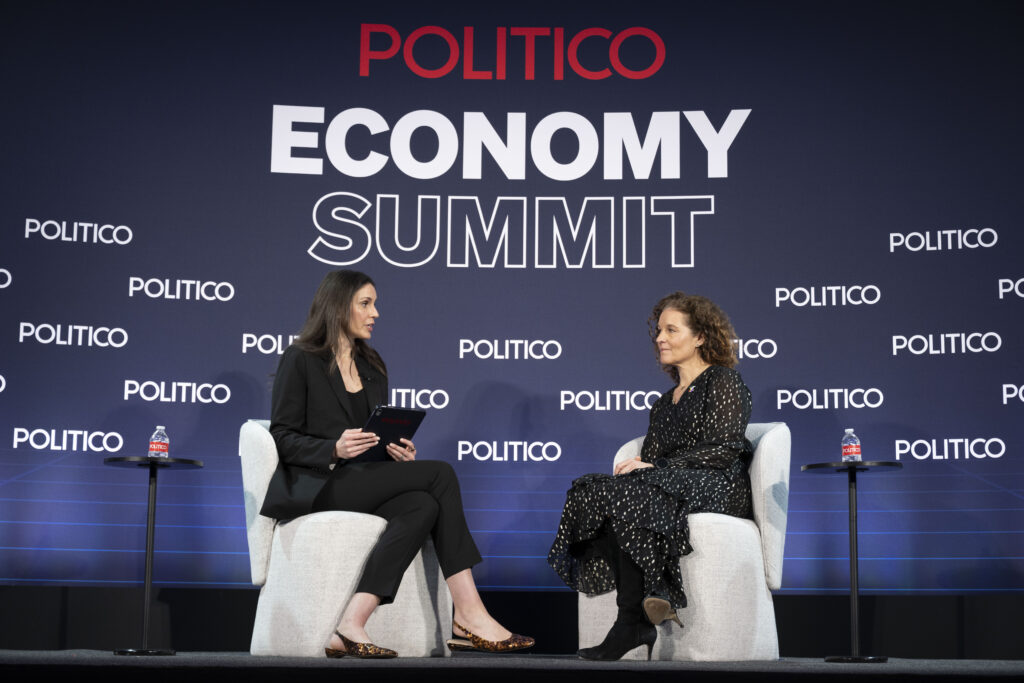
Affordability and Child Care Take Center Stage at POLITICO Economy Summit
You can’t talk about affordability in America without talking about child care “Affordability” has quickly become the defining economic theme of 2026, especially as families look ahead to the midterm …

First Five Things To Know About: The SEED Act
Early childhood educators play a critical role in supporting children’s development and enabling parents to work. To ensure young learners can succeed, many use their own money to buy necessary …

FFYF Letter to the Ways and Means Committee in Support of the SEED Act
FFYF sent the following letter in support of the Supporting Early-childhood Educators’ Deductions (SEED) Act to the Committee on Ways and Means Chairman Jason Smith and Ranking Member Richard Neal. …