Capitol Hill Business Roundtable: Foundational Workers, Child Care, and the U.S. Economy
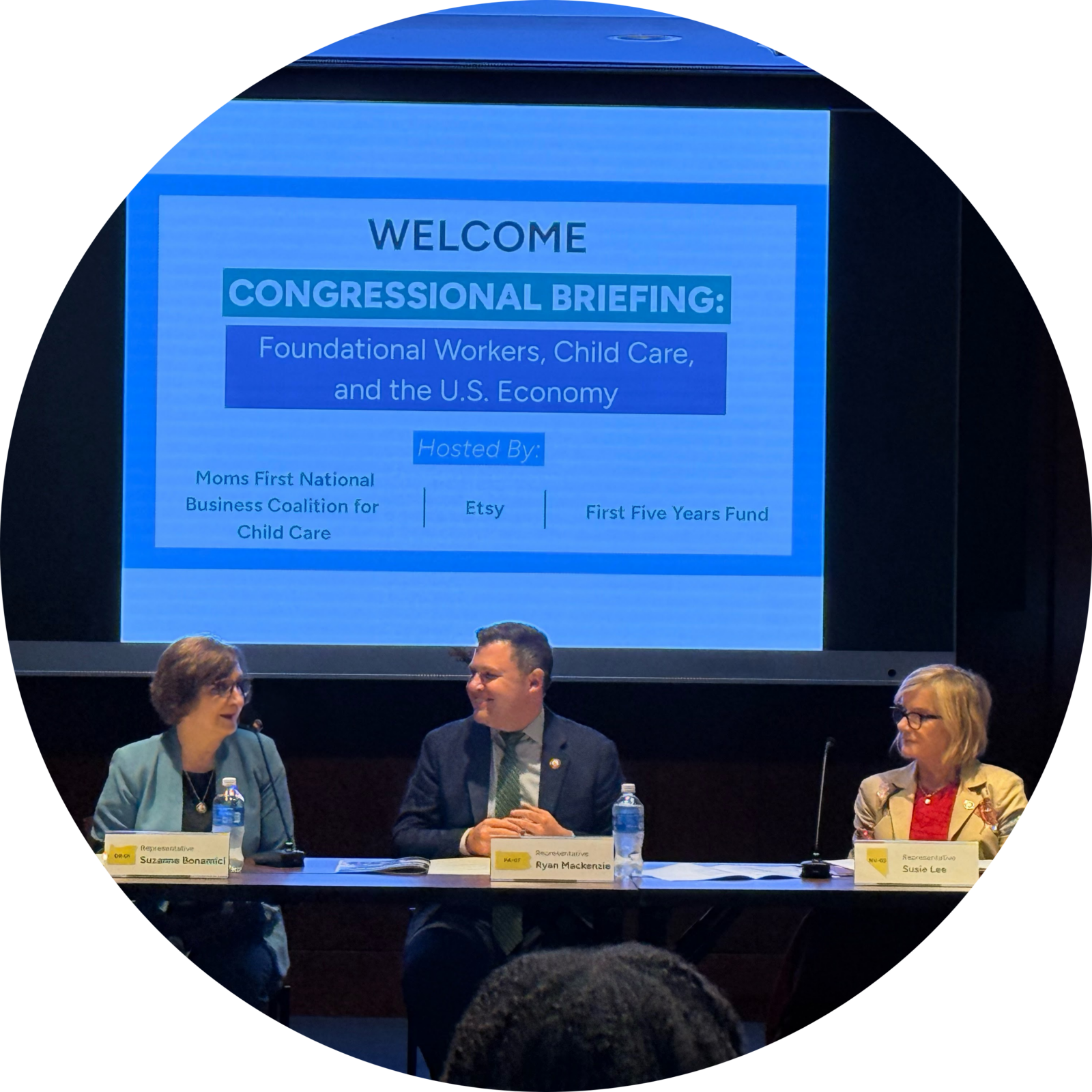
The First Five Years Fund, Moms First’s National Business Coalition for Child Care, and Etsy hosted a bipartisan roundtable discussion with more than a dozen business leaders from across the country. Representatives Suzanne Bonamici (D-OR), Susie Lee (D-NV), and Ryan Mackenzie (R-PA) were there to discuss the challenges child care poses for employers and the solutions needed to better support working families.
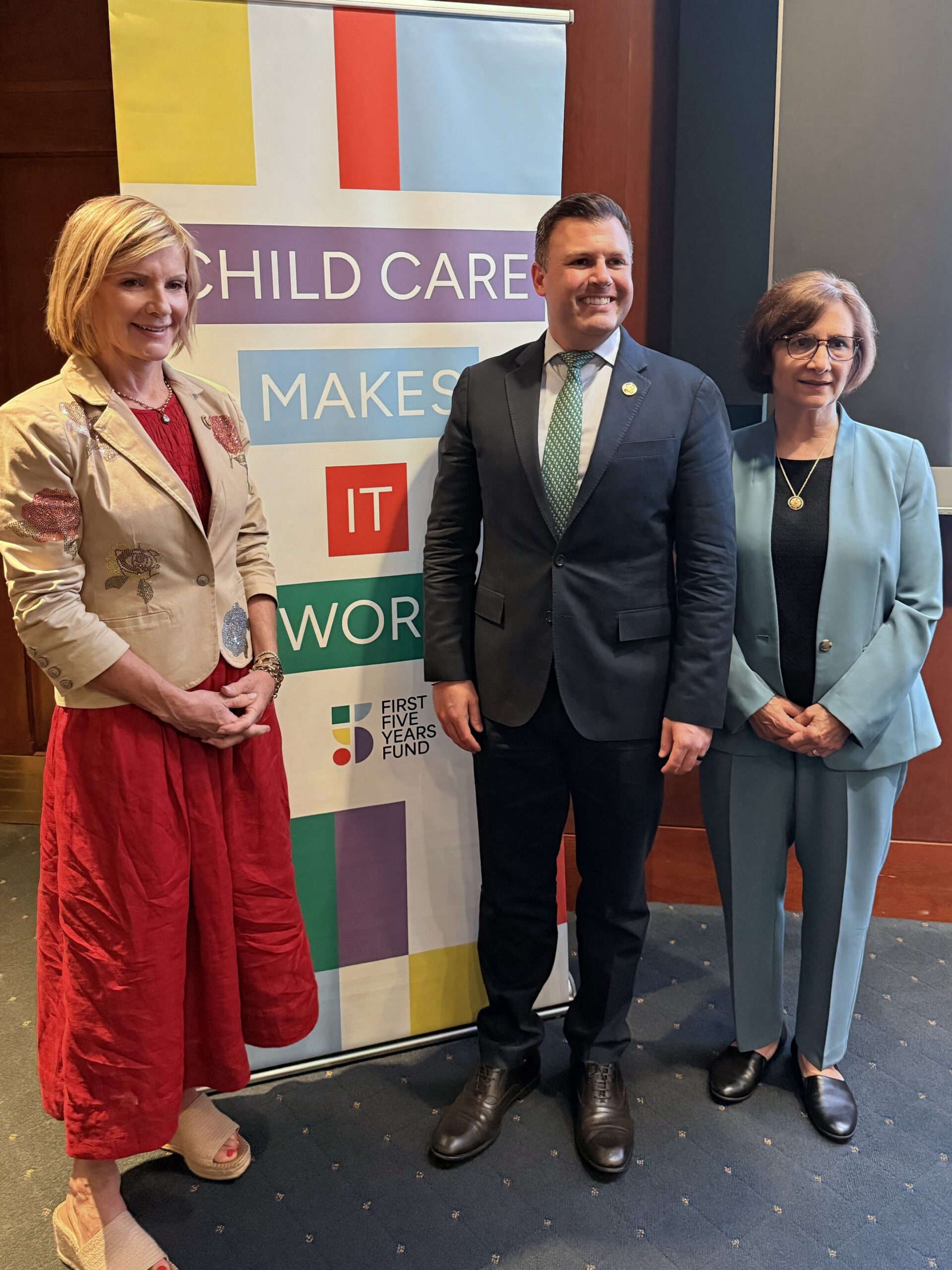
Corporate leaders highlighted the critical role child care plays in supporting employees, strengthening recruitment and retention, and helping businesses thrive. They shared how they’re investing in benefits and local partnerships while underscoring the need for broader solutions to help families access affordable, reliable care.
Members and participants agreed that employers cannot solve the child care crisis on their own, and that Congress has an essential role to play in building a stronger child care system that works for families, providers, businesses, and the economy.
Moms First, Etsy, and First Five Years Fund have new resources underscoring the essential role child care plays in the lives of children, working parents, and employers:
Members agreed that child care is essential to a strong workforce and economy, and that Congress has an important role to play.
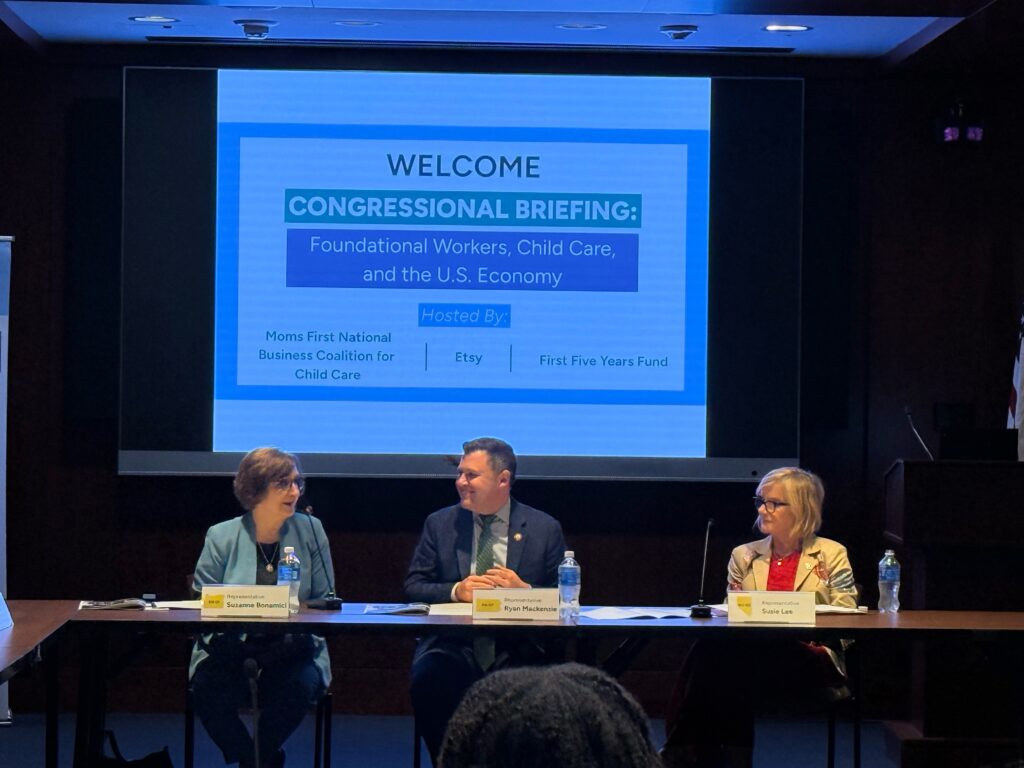
Congresswoman Susie Lee (D-NV): To me, this isn’t just a business issue or a worker issue, it’s a community issue. And honestly, it’s really a future-of-work issue. In my state, in particular, so many businesses struggle when their employees are faced with child care challenges. We’re one of the states where it costs more to send your child to a full-time child care center than to send your child to a state university.
As we talk about infrastructure and infrastructure investment in this country, I think we have to expand that definition and recognize that providing workers and families with the things they need to go to work is actually infrastructure.
Congresswoman Suzanne Bonamici (D-OR): When I first started talking about child care 12 years ago, most of the people talking about it were moms. Now I’m hearing about it from moms, dads, and businesses. They’re all seeing the impact that child care challenges have on parents’ ability to work and the hours they’re able to work.
We can’t rely on businesses to solve the problem alone. Rural communities, in particular, face even greater challenges. Employers have an important role to play, but Congress shouldn’t expect them to solve the problem by themselves. We need to do everything we can to find solutions that meet the needs of every family.
Congressman Ryan Mackenzie (R-PA): When we talk about child care, it’s always very personal. My wife and I have two small children, and every family in a situation like ours is having similar conversations. You’re trying to figure out how to balance child care, whether one spouse is going to step away from the workforce, or, if both parents return to work, how you’re going to afford child care.
Host organizations underscored that child care is essential to entrepreneurs, employees, and employers alike. While businesses are committed to supporting working families, they emphasized that Congress has an essential role to play.
Sarah Rittling, First Five Years Fund: There is no one, single policy that will solve our child care challenges. Momentum matters. Families cannot solve this on their own. Employers can’t solve this on their own either. Congress has an essential role to play in building a stronger child care system that works for families, employers, providers, and our economy.
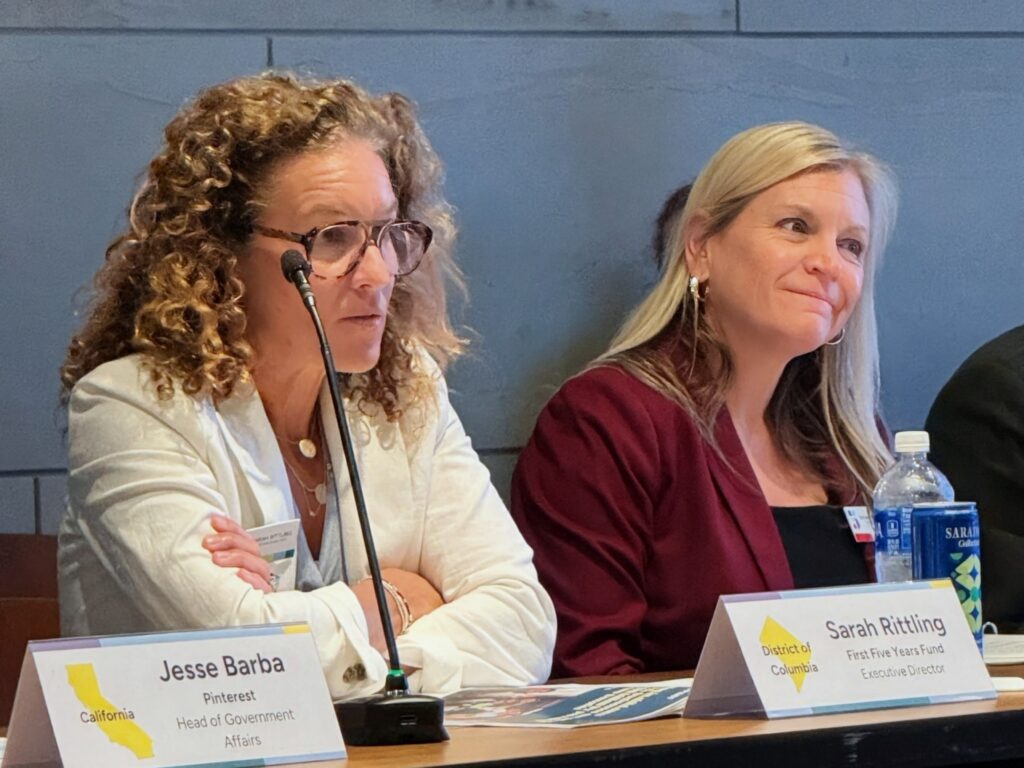
Molly Day, Moms First: Across every industry we studied — healthcare, hospitality, retail, manufacturing, food, education — the drivers were different, but the conclusion was the same. Employers see child care as valuable. It pays back. And they want more of it — including from federal policy.
Jeffrey Zubricki, Etsy: “We’re a marketplace with about 5 million sellers, predominantly women and one-person shops running from home. When we talk to our community, we hear firsthand how important child care is, especially for people who are making and creating things. As a company that supports microbusinesses and self employed shops of one we want to give voice to these issues. And as a corporate employer, we also want to make sure our employees can bring their whole selves to work.”
Businesses underscored the value of investing in child care for recruitment, retention, and workforce stability:
Toni Fritz, Chobani: We help employees find qualified child care and provide a $1,200 annual stipend plus backup child care credits for emergencies.
After medical, dental, and vision, it’s our most-used benefit. Our workforce includes many multi-generational families, and employees can designate a family member as their child care provider and compensate them through the program.
As we continue to measure all our health and wellness initiatives, we’re focused on strengthening their positive impact on overall attrition and attendance.
Karla Thieman, JBS Foods: After COVID, we were facing high turnover rates, and it was an industry-wide challenge. We started conducting community surveys with our team leaders in the areas where our facilities are located, and very quickly child care rose to the top as one of the biggest challenges.
We worked with providers to secure designated child care slots, offer earlier drop-off times for employees with early shifts, coordinate transportation, and build flexibility into the system. JBS pays up to 50% of the daily child care rate. The results have been significant. The facilities where we’ve addressed child care have the lowest turnover rates of any of our facilities across the country.
Emily Hall Warren, Badger Balm (New Hampshire): Manufacturing in rural New Hampshire presents challenges, both from a supply chain perspective and when it comes to finding employees. We simply don’t have enough child care in New Hampshire for the people who need it, and when care is available, it may be too expensive or not at the level of quality that parents would prefer.”
Craig Link, Scout Motors (South Carolina): As we prepare to create thousands of jobs in South Carolina, we’re focused on attracting and retaining a talented workforce by building a workplace where employees can thrive both on the job and at home. That’s why child care has been part of our planning from the beginning.
By offering access to quality child care, we can help reduce a significant source of stress for working families, giving parents greater peace of mind while they are at work. It’s a meaningful benefit for our employees and an important part of our long-term workforce strategy.
Jessica Chang, Upwards: The Baltimore Police Department began offering child care allowance and search assistance to employees because retention was one of its biggest challenges. The department was losing officers to other jurisdictions, and it costs about $132,000 to replace a Baltimore police officer.
The BPD and Upwards approached the challenge from an ecosystem perspective and created a child care solution designed to improve workforce stability and retention. After one year, the Maryland Family Network hired a third-party company to evaluate the program’s impact. The survey found that 52% of employees who had been planning to leave decided to stay because of the child care allowance.
Alison Williams, Excel by 8: The people closest to their communities understand best how to solve their local child care challenges. We’ve seen that with two small businesses in Arkansas. One is a pediatric clinic with fewer than 30 employees that leveraged the DCAP benefit for its employees. The two mothers who participated in the program both returned to work, giving the clinic a 100% retention rate. We also worked with a bank that expanded access through the 45F tax credit to all of its employees. This isn’t just a solution for large companies—small businesses can do it, too.
Subscribe to FFYF First Look
Every morning, FFYF reports on the latest child care & early learning news from across the country. Subscribe and take 5 minutes to know what's happening in early childhood education.
Related

The Friday Five: The Latest Child Care and Early Learning News
The child care and early learning news you don’t want to miss. Check here for updates every Friday for the latest information you need to know.

Head Start and Early Head Start: The Program Overview
This one-pager provides data and information on how Head Start works and who it serves.

Making News: MIECHV Grants, 2026
MIECHV is making headlines! The Maternal, Infant, and Early Childhood Home Visiting (MIECHV) program provides federal funding to states to use to pair families with very young children with trained …