Early Learning and Care: A Proven Return on Investment
High-quality early learning and care is a proven driver of both economic growth and societal well-being in the United States. Decades of research show that investments in early care and education generate substantial returns, producing both immediate benefits for children and families and long-term gains for the broader economy. In dollars and cents, studies show estimated returns ranging from $3[1] to $16 per dollar spent.[2] While estimates vary due to differences in program design, duration, population served, research methods, and outcomes measured, these studies reach a consistent conclusion: investing in early learning yields significant and enduring economic and social returns.
Yet despite this evidence, America’s child care system continues to face significant funding and sustainability challenges. This resource outlines why investments in early learning – both child care and preschool – are critical, and how strategic investments can generate lasting returns across education, health, employment and earnings, and public safety.
EDUCATION
Perhaps the most obvious benefits of early learning and care are those related to educational outcomes. Early learning and care programs improve student academic achievement and mitigate expensive downstream costs in the K–12 education system. In the near term, these benefits manifest as higher rates of kindergarten readiness and later translate into higher graduation rates and significant reductions in special education placements, grade retention, and disciplinary issues.
Over the last 50 years, dozens of studies have tracked the performance of children enrolled in high-quality early childhood education programs compared to their peers. In the near term, studies have found that early learning programs have a positive impact on kindergarten readiness.[3] These impacts include stronger literacy skills, phonological awareness, the ability to identify written letters and the sounds they represent, mathematical skills like reasoning and partial problem solving, and language abilities such as oral language skills and receptive vocabulary. Gains in kindergarten readiness have been documented across a variety of programs, including those that vary in length, intensity, and populations served.[4]
In addition to preparing children for kindergarten entry, investing in early childhood education can reduce the need for special education services by identifying and addressing developmental needs early, before a child requires more intensive services. A 2017 meta-analysis of 22 studies found that participation in high-quality preschool, on average, reduced future special education placement by 8.1 percentage points.[5] Without appropriate intervention, children may be misidentified or placed in more restrictive settings than necessary, making it harder to transition back to general education and limiting long-term academic opportunities.[6]

Misidentification disproportionately affects children of color[7] and increases costs, as special education services cost about twice as much as general education.[8] A 2015 analysis also found that, together, North Carolina’s Smart Start and More at Four early learning programs reduced the likelihood of third-grade special education placement by 39%, generating estimated savings of $448 and $1,348[9] per child, respectively.[10]
The benefits of early learning and care programs persist as children continue to move through their academic careers. Children who attend high-quality early learning programs are less likely to repeat a grade and are more academically prepared for later grades.[11] Early childhood programs can set children on the right track at a young age by addressing gaps in cognitive development that begin to show as early as nine months of age.[12] Specifically, the 2017 meta-analysis found that participation in high-quality preschool decreased grade retention by 8.3 percentage points.[13] And with public schools spending an average of $17,619 per pupil annually,[14] early learning and care is a cost-saving investment that reduces the need for more expensive interventions later.
Beyond specific academic outcomes, early learning experiences shape children’s social and emotional development through everyday interactions with adults and peers as they learn to share, navigate conflict, solve problems together, and play. These experiences help children develop their sense of self, regulate and express emotions, form healthy relationships, and complete tasks. High-quality early learning programs have been associated with stronger social and emotional development, which supports academic success and positive behavior.[15] These benefits are linked to lower rates of suspensions and expulsions,[16] which can exacerbate behavioral and academic challenges.[17] A 2016 study found that high school suspensions, in particular, cost an estimated $35 billion annually.[18] Early intervention can help mitigate these costs by addressing challenging behavior earlier, helping children build skills they need to succeed, and reducing the need for subsequent disciplinary action.
Overall, research demonstrates that early care and learning improves academic trajectories. Multiple longitudinal studies have found that high-quality programs are associated with long-term academic success and educational attainment. For example, the Abecedarian Project found that children who participated in its high-quality birth-to-age-five program had higher test scores through secondary school, higher IQ scores through age 15, and were more likely to earn a bachelor’s degree and/or hold a job by age 30 than peers in the control group.[19] Other programs, such as Tulsa’s public pre-K and Head Start programs[20] and New Jersey’s Abbott Preschool Program,[21] have also shown academic gains well into elementary school. The 2017 meta-analysis found that early childhood education program attendance is associated with an 11.4-percentage-point increase in high school graduation rates.[22] A study of Boston’s public preschool program also found that participation was associated with increased college attendance.[23] High school graduation, in particular, carries significant economic returns, as individuals who do not complete high school cost the economy an estimated $262,000 and lose an estimated $689,000[24] in individual lifetime earnings.[25]
HEALTH
Public investment in early childhood programs has been shown to generate long-term cost savings for individuals and society by improving population health and reducing downstream health care costs.[26] Quality early learning and care programs can prevent or mitigate the damaging effects of early-life stress and adverse childhood experiences (ACEs).[27] Measures to prevent or address ACEs can be particularly impactful during early childhood because it is such a critical period for brain development.

ACEs affect as many as one in four preschool-aged children and can have lifelong consequences for mental and physical health.[28] These experiences – including physical and emotional abuse, neglect, caregiver mental illness, and household violence – can contribute to developmental delays in childhood[29] and increase the risk of poor long-term health outcomes, including heart disease, diabetes, depression, and alcoholism, in adulthood if children are not properly supported at a young age.[30] Children in families with low incomes are more than twice as likely to be exposed to three or more ACEs.[31]
High-quality early childhood programs can provide children with supportive caregiving relationships, which are essential for healthy development and can mitigate the harmful effects of ACEs.Reducing the effects of ACEs helps set children up to succeed in school, graduate, and participate productively in the workforce.[32] Notably, additional state spending on child care assistance was one of the most statistically significant predictors of decreased maltreatment reports and substantiations, foster care placements, and fatalities.[33] In particular, states with more generous income eligibility limits for child care subsidies were found to have lower rates of referral for physical abuse and neglect from birth to age five.[34] Additionally, children in Head Start were 93% less likely to be placed in foster care than children without early care access.[35] These decreases are associated with substantial long-term cost savings.[36] One study of states’ spending on five public benefit programs, including child care assistance, found that each additional $1,000 spent per person living below the federal poverty line yielded an estimated $153 billion in long-term savings from reduced maltreatment-related costs.[37]
Early childhood programs can also improve children’s nutrition and physical health, with potential benefits that extend into adulthood. Research finds that children in high-quality preschool programs engage in healthier eating habits and are less likely to have high blood pressure later in life.[38] Given the significant health and economic consequences of obesity – which accounts for an estimated $260.6 billion in annual U.S. health care costs – investments in early childhood programs that promote healthy habits are particularly important.[39]
Many early childhood programs incorporate healthy eating and physical activity into their daily routines. Specifically, children who enrolled in Head Start programs at an unhealthy weight were found to have a significantly healthier BMI by kindergarten entry.[40] The federal Child and Adult Care Food Program (CACFP) also helps child care programs provide nutritious foods to 4.4 million children each day.[41] By improving nutrition early in life, programs like CACFP can reduce food insecurity, support healthy development, improve oral health, and help prevent costly health problems later in life.[42]
Child care and preschool programs can also play an integral role in connecting children and families with services and information about good oral health practices.[43] These efforts matter because children’s oral health can affect their ability to learn and succeed in school.
For example, a study of Los Angeles County public schools found that students with toothaches were almost four times as likely to have a low grade point average and six times as likely to miss school.[44] Expanding access to preventive dental services and oral health programs can reduce these absences, related health issues, and costly dental interventions later in life.[45]
High-quality child care and preschool programs also help identify and support developmental delays and health challenges by connecting children and their families to necessary medical screening, services, and insurance information.[46] For example, Head Start ensures children receive vision, hearing, and developmental screenings within 45 days of enrollment to identify needs early and support timely referrals.[47] Head Start programs must also establish a Health and Mental Health Services Advisory Committee, which typically includes local health providers – such as pediatricians, nutritionists, and mental health professionals – to help meet children’s comprehensive health needs.[48]
The health benefits of child care and preschool extend beyond children to their parents as well. Many programs take a two-generation approach and include parent support services, such as home visiting programs that teach parenting skills and support parents with mental health services. These services can decrease parental stress, improve mental health, build trust in medical systems, and reduce the risk of child abuse. Globally, in-person and virtual supports for parents and caregivers have been shown to produce returns of around $12 per dollar invested. While these estimates reflect program costs in low- and middle-income countries rather than U.S. costs, they reinforce a consistent finding: supporting parents benefits children and society alike.[49]
EMPLOYMENT AND EARNINGS
High-quality early learning and care delivers significant economic benefits through increased employment and higher earnings. Reliable, quality child care allows parents to go to work knowing their child is in a safe and nurturing environment, giving parents the opportunity to gain economic stability and increase their earnings, which can benefit children directly and reduce reliance on public assistance.
Policies that support parents’ workforce participation have significant impacts on earnings and self-sufficiency, which in turn strengthens the broader economy. For example, a study of New Haven’s universal pre-K program found that winning a lottery seat increased parents’ incomes during the child’s enrollment by an estimated $5,464 annually (21.7% above the baseline) and by an estimated average of $6,474 per year (20.9% above the baseline) for the following six years.[50]
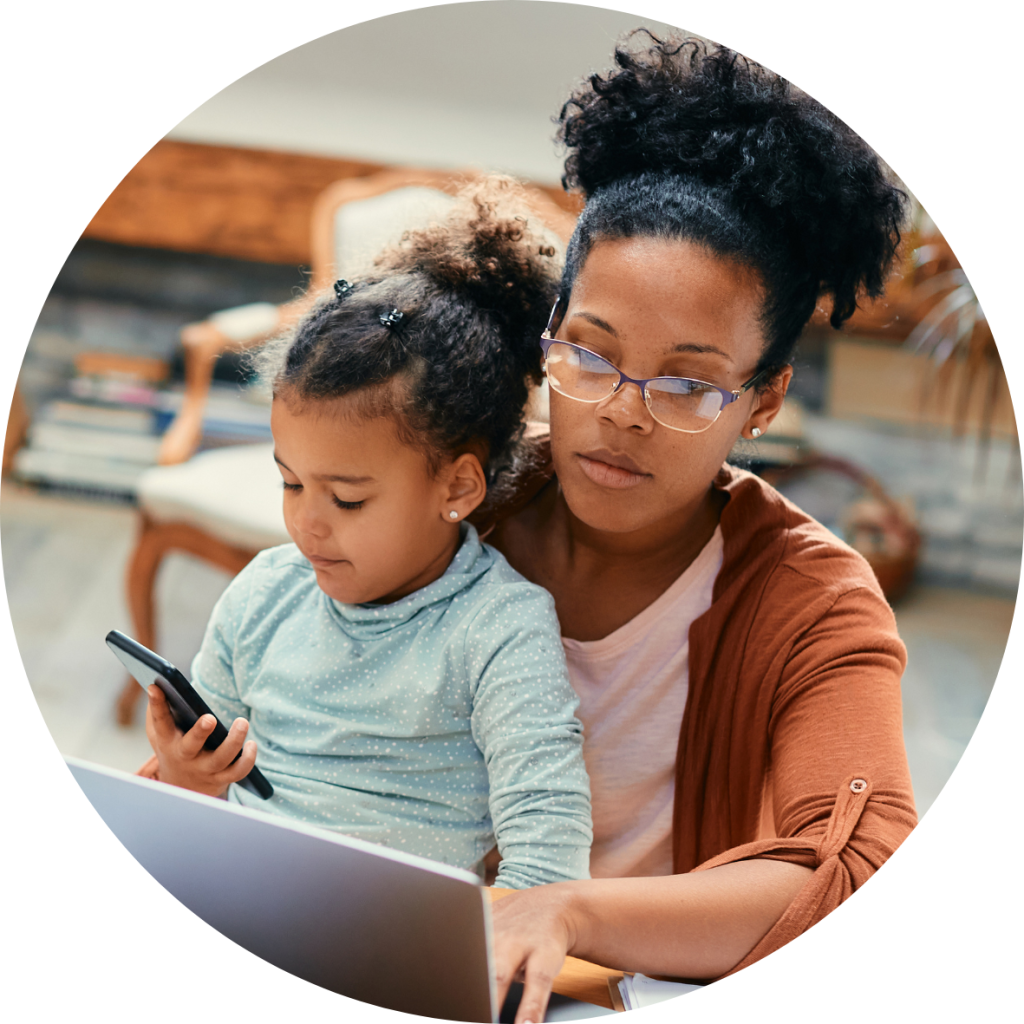
This also increased tax revenue, which over time substantially offset the cost of the program and reduced the net cost of providing high-quality, full-day care.[51]
More broadly, investing in child care supports women’s economic security by enabling mothers to participate in the workforce and pursue educational and career opportunities. Maternal labor force participation is three percentage points lower in child care deserts.[52] Research estimates that access to affordable child care for two children would increase a mother’s lifetime earnings by $94,000.[53] Additionally, the Abecedarian Project demonstrated significant benefits for teenage mothers. By the time their children were four and a half years old, mothers in the program were more likely to have completed high school and received postsecondary training, more likely to be self-supporting, and less likely to rely on public assistance.[54]
The economic benefits of affordable, quality child care are clear, yet these programs remain out of reach for many families. Around 46% of children under age six live in child care deserts – areas with too few or no licensed child care slots to meet local need.[55] Even when care is available, high costs create significant financial strain, pushing approximately 446,000 middle-class families into a lower income quintile and 134,000 families into poverty each year.[56] These challenges extend beyond individual families to the broader economy, resulting in an estimated $172 billion in lost earnings, productivity, and revenue each year. Of this annual total, working families bear $134 billion in forgone earnings and job search costs, while businesses lose $38 billion in reduced productivity, absences, and workforce disruptions.[57]
In addition to supporting parents’ workforce participation, investing in child care is crucial to building the skilled workforce needed for future economic growth. The Congressional Budget Office projects that the U.S. population will continue to age between 2026 and 2056, with the number of people age 65 or older growing faster through 2036 than younger age groups.[58] As a result, today’s children will have a much larger senior population relying on them to fuel the economy when they reach working age. Evidence-based early childhood policies can help equip the next generation with the skills and knowledge needed to sustain a strong, productive economy. Several longitudinal studies have found that high-quality early learning programs are associated with higher educational attainment and stronger employment outcomes, generating long-term economic returns as participants pay more in taxes on their higher earnings. For example, the Perry Preschool Study found that, by age 40, participants in the high-quality program had 42% higher median monthly incomes and were 26% less likely to have received government assistance in the previous 10 years than members of the control group.[59]
PUBLIC SAFETY
Early childhood education is a cost-effective investment in public safety.[60] High-quality early learning experiences help build children’s foundational skills, including self-regulation, problem solving, and the ability to navigate challenging situations. These skills shape their future behavior and influence outcomes into adulthood. Longitudinal studies have found that participation in quality programs is associated with lower rates of substance abuse, arrests, convictions, and incarceration.[61] In fact, the vast majority (88%) of the public return on investment (ROI) from the Perry Preschool program came from savings associated with reduced crime.[62]
High-quality programs support these outcomes through strong teacher-child relationships, developmentally appropriate curricula, and practices that meet children’s individual needs.[63],[64] By fostering healthy social-emotional development and helping children build the skills to manage their emotions and behavior, early childhood professionals can help establish a foundation for positive outcomes later in life. For example, one study found that enrollment in Chicago’s Child-Parent Centers was associated with a 25% reduction in felony arrests and a 19-24% reduction in substance abuse compared to children with comparable demographic backgrounds who did not attend.[65] Similarly, by age 40, children who attended Perry Preschool were less likely to have been arrested and less likely to have ongoing involvement with the criminal justice system than children who did not participate.[66]
High-quality early education programs can play an important role in early intervention and crime prevention by addressing factors associated with persistent criminal behavior. Research has found the five major predictors of persistence in crime to be education and employment problems, delinquent peers, family problems, substance abuse, and certain mental health challenges.[67] Early learning programs can help address these risk factors by improving education[68] and employment outcomes[69] for both children and their families,[70] improving behavioral outcomes,[71] mitigating the effects of ACEs,[72] reducing the likelihood of substance abuse,[73] and identifying mental and physical health needs sooner.[74]

By addressing multiple risk factors during a critical period of development, early learning programs can give children a stronger start and help interrupt negative cycles before they begin. This early intervention is particularly important given that children arrested before the age of 12 are more likely to experience repeated arrests and continued involvement with the justice system into early adulthood.[75]
Improving public safety also generates significant cost savings. Early investment reduces expensive downstream costs associated with law enforcement, incarceration, and victim restitution. A cost-benefit analysis of universal preschool[76] found returns of more than $22,000 per child served when programs targeted families in low-income communities, including benefits from reduced crime. In addition, an analysis that combined data from the Carolina Abecedarian Project (ABC) and the Carolina Approach to Responsive Education (CARE) found substantial economic returns from crime reduction.[77] ABC/CARE reduced the incidence of crime among both men and women, yielding substantial savings in each case. While the reductions were larger for women, the cost savings of crime reduction for men ($466,318) were far greater than those for women ($32,790).[78] The difference in savings by gender reflects differences in the types of crimes committed: men committed more costly crimes, with a large share of costs stemming from victimization and violent crime.
Both law enforcement and criminal justice advocates support efforts to increase investment in early childhood education as an effective way to improve public safety and reduce downstream costs. Both recognize that prevention is more cost-effective than remediation,meaning we either pay for quality early childhood programs today or continue paying the associated costs of law enforcement, incarceration, and other expensive interventions for decades to come.[79]
CONCLUSION
A substantial body of research finds that early learning and care is one of the most impactful investments governments can make. Well-funded, quality early childhood experiences deliver multigenerational benefits, with economic and societal returns in education, health, employment and earnings, and public safety. These impacts are felt immediately through improved school readiness and higher parental workforce participation and earnings, and they endure over the long term by reducing criminal justice costs and increasing individual tax contributions. Yet, despite these proven benefits, current funding remains a fraction of what is required to sustain the early childhood system.
The benefits that affordable, high-quality child care provides are not guaranteed in an underfunded system. Protecting our future economic stability and the healthy development of our nation’s youngest children depends on increased and sustainable investment in early care and learning.
References
[1] Timothy J. Bartik, William Gormley, Sara Amadon, Douglas Hummel-Price, and James Fuller. “A Benefit-Cost Analysis of Tulsa Pre-K Based on Effects on High School Graduation and College Attendance.” Kalamazoo, MI: W.E. Upjohn Institute for Employment Research, 2023. https://research.upjohn.org/cgi/viewcontent.cgi?article=1028&context=up_policypapers.
[2] Lawrence J. Schweinhart “The High/Scope Perry Preschool Study Through Age 40: Summary, Conclusions, and Frequently Asked Questions.” High/Scope Educational Research Foundation. https://highscope.org/wp-content/uploads/2024/07/perry-preschool-summary-40.pdf.
[3] Beth Meloy, Madelyn Gardner, and Linda Darling-Hammond. “Untangling the Evidence on Preschool Effectiveness: Insights for Policy Makers.” Palo Alto, CA: Learning Policy Institute, 2019. https://learningpolicyinstitute.org/media/315/download?inline&file=Untangling_Evidence_Preschool_Effectiveness_REPORT.pdf.
[4] Ibid.
[5] Dana Charles McCoy, Hirokazu Yoshikawa, Kathleen M. Ziol-Guest, Greg J. Duncan, Holly S. Schindler, Katherine Magnuson, Rui Yang, Andrew Koepp, and Jack P. Shonkoff. “Impacts of Early Childhood Education on Medium- and Long-Term Educational Outcomes.” Educational Researcher 46 (8): 474–87, 2017. https://doi.org/10.3102/0013189×17737739.
[6] Claire Raj. “The Misidentification of Children with Disabilities: A Harm with No Foul.” Arizona State Law Journal, 373-437, 2017. https://scholarcommons.sc.edu/cgi/viewcontent.cgi?article=2068&context=law_facpub.
[7] Ibid.
[8] Clara G. Muschkin, Helen F. Ladd, and Kenneth A. Dodge. “Impact of North Carolina’s Early Childhood Initiatives on Special Education Placements in Third Grade.” National Center for Analysis of Longitudinal Data in Education Research, 2015. https://files.eric.ed.gov/fulltext/ED560672.pdf.
[9] These amounts are in 2009 dollars.
[10] Clara G. Muschkin, Helen F. Ladd, and Kenneth A. Dodge. “Impact of North Carolina’s Early Childhood Initiatives on Special Education Placements in Third Grade.” National Center for Analysis of Longitudinal Data in Education Research, 2015. https://files.eric.ed.gov/fulltext/ED560672.pdf.
[11] Beth Meloy, Madelyn Gardner, and Linda Darling-Hammond. “Untangling the Evidence on Preschool Effectiveness: Insights for Policy Makers.” Palo Alto, CA: Learning Policy Institute, 2019. https://learningpolicyinstitute.org/media/315/download?inline&file=Untangling_Evidence_Preschool_Effectiveness_REPORT.pdf.
[12] Ibid.
[13] Dana Charles McCoy, Hirokazu Yoshikawa, Kathleen M. Ziol-Guest, Greg J. Duncan, Holly S. Schindler, Katherine Magnuson, Rui Yang, Andrew Koepp, and Jack P. Shonkoff. “Impacts of Early Childhood Education on Medium- and Long-Term Educational Outcomes.” Educational Researcher 46 (8): 474–87, 2017. https://doi.org/10.3102/0013189×17737739.
[14] US Census Bureau. “Summary Table 8: Per Pupil Amounts for Current Spending of Public Elementary-Secondary School Systems by State: Fiscal Year 2024.” Census.Gov, 2026. https://www.census.gov/data/tables/2024/econ/school-finances/secondary-education-finance.html.
[15] Beth Meloy, Madelyn Gardner, and Linda Darling-Hammond. “Untangling the Evidence on Preschool Effectiveness: Insights for Policy Makers.” Palo Alto, CA: Learning Policy Institute, 2019. https://learningpolicyinstitute.org/media/315/download?inline&file=Untangling_Evidence_Preschool_Effectiveness_REPORT.pdf.
[16] Amie F Bettencourt, Deborah Gross, Grace Ho, and Nancy Perrin. “The Costly Consequences of Not Being Socially and Behaviorally Ready to Learn by Kindergarten in Baltimore City.” Journal of Urban Health 95 (1): 36–50, 2017. https://doi.org/10.1007/s11524-017-0214-6.
[17] Disability Rights North Carolina. “School Suspensions Do Not Improve Student Behavior.” 2022. https://disabilityrightsnc.org/news/school-suspensions-do-not-improve-student-behavior/.
[18] Anya Kamenetz. “High School Suspensions Cost the Country $35 Billion Annually, Report Estimates.” NPR, June 2, 2016. https://www.npr.org/sections/ed/2016/06/02/480181488/high-school-suspensions-cost-the-country-35-billion-annually-report-estimates.
[19] Frank Porter Graham Child Development Institute. “Follow-Up Studies – the Carolina Abecedarian Project.” Frank Porter Graham Child Development Institute. https://abc.fpg.unc.edu/follow-up-studies/.
[20] Anna D. Johnson, Anne Partika, Anne Martin, Ian Lyons, Sherri Castle, and Deborah A. Phillips. “Public Preschool Predicts Stronger Third-Grade Academic Skills.” AERA Open 10 (January), 2024. https://doi.org/10.1177/23328584231223477.
[21] W. Steven Barnett, Kwanghee Jung, Min-Jong Youn, and Ellen C. Frede. “Abbott Preschool Program Longitudinal Effects Study: Fifth Grade Follow-Up.” National Institute for Early Education Research, 2013. https://nieer.org/research-library/abbott-preschool-program-longitudinal-effects-study.
[22] Dana Charles McCoy, Hirokazu Yoshikawa, Kathleen M. Ziol-Guest, Greg J. Duncan, Holly S. Schindler, Katherine Magnuson, Rui Yang, Andrew Koepp, and Jack P. Shonkoff. “Impacts of Early Childhood Education on Medium- and Long-Term Educational Outcomes.” Educational Researcher 46 (8): 474–87, 2017. https://doi.org/10.3102/0013189×17737739.
[23] Guthrie Gray-Lobe, Parag A. Pathak, and Christopher R. Walters. “The Long-Term Effects of Universal Preschool in Boston.” Cambridge, MA: National Bureau of Economic Research, 2021. https://www.nber.org/system/files/working_papers/w28756/w28756.pdf.
[24] These amounts are in 2017 dollars.
[25] Dana Charles McCoy, Hirokazu Yoshikawa, Kathleen M. Ziol-Guest, Greg J. Duncan, Holly S. Schindler, Katherine Magnuson, Rui Yang, Andrew Koepp, and Jack P. Shonkoff. “Impacts of Early Childhood Education on Medium- and Long-Term Educational Outcomes.” Educational Researcher 46 (8): 474–87, 2017. https://doi.org/10.3102/0013189×17737739.
[26]Office of Disease Prevention and Health Promotion. “Early Childhood Development and Education – Healthy People 2030 | Health.Gov.” Health.Gov. 2019. https://odphp.health.gov/healthypeople/priority-areas/social-determinants-health/literature-summaries/early-childhood-development-and-education.
[27] Henry T. Puls, Matthew Hall, James D. Anderst, Tami Gurley, James Perrin, and Paul J. Chung. “State Spending on Public Benefit Programs and Child Maltreatment.” Pediatrics 148 (5): e2021050685, 2021. https://doi.org/10.1542/peds.2021-050685.
[28] Shannon T. Lipscomb, Bridget Hatfield, Hillary Lewis, Emiko Goka-Dubose, and Caitlyn Abshire. “Adverse Childhood Experiences and Children’s Development in Early Care and Education Programs.” Journal of Applied Developmental Psychology 72 (72): 101218, 2021. https://doi.org/10.1016/j.appdev.2020.101218.
[29] Center on the Developing Child at Harvard University. “The Impact of Early Adversity on Children’s Development.” Policy brief, 2010. https://developingchild.harvard.edu/wp-content/uploads/2024/10/inbrief-adversity-1.pdf.
[30] Ibid.
[31] Jeong-Kyun Choi, Dan Wang, and Aurora P. Jackson. “Adverse Experiences in Early Childhood and Their Longitudinal Impact on Later Behavioral Problems of Children Living in Poverty.” Child Abuse & Neglect 98 (98): 104181, 2019. https://doi.org/10.1016/j.chiabu.2019.104181.
[32] “Breaking Through: Understanding Stress and Resilience in Young Children | HeadStart.Gov.” HeadStart.Gov. May 30, 2024. https://headstart.gov/video/breaking-through-understanding-stress-resilience-young-children.
[33] Henry T. Puls, Matthew Hall, James D. Anderst, Tami Gurley, James Perrin, and Paul J. Chung. “State Spending on Public Benefit Programs and Child Maltreatment.” Pediatrics 148 (5): e2021050685, 2021. https://doi.org/10.1542/peds.2021-050685.
[34] J. Bart Klika, Kathryn Maguire-Jack, Megan Feely, William Schneider, Garrett T. Pace, Whitney Rostad, Catherine A. Murphy, and Melissa T. Merrick. “Childcare Subsidy Enrollment Income Generosity and Child Maltreatment.” Children 10 (1): 64, 2022. https://doi.org/10.3390/children10010064.
[35] Sacha Klein, Lauren Fries, and Mary M. Emmons. “Early Care and Education Arrangements and Young Children’s Risk of Foster Placement: Findings From a National Child Welfare Sample.” Children and Youth Services Review 83 (December): 168–78, 2017. https://doi.org/10.1016/j.childyouth.2017.09.006.
[36] Chapin Hall. “A Preventable Cost: Economic Burden of Child Maltreatment and Child Welfare Involvement.” 2024. https://www.chapinhall.org/wp-content/uploads/Cost-Savings-from-Investing-in-Children-and-Families_Chapin-Hall_6.3.2024-1.pdf.
[37] Henry T. Puls, Matthew Hall, James D. Anderst, Tami Gurley, James Perrin, and Paul J. Chung. “State Spending on Public Benefit Programs and Child Maltreatment.” Pediatrics 148 (5): e2021050685, 2021. https://doi.org/10.1542/peds.2021-050685.
[38] W. Steven Barnett, and Allison Friedman-Krauss. “Early Childhood Education: Three Pathways to Better Health.” National Institute for Early Education Research, 2019. https://nieer.org/research-library/three-pathways-better-health.
[39] John Cawley. “Direct Medical Costs of Obesity in the United States and the Most Populous States.” Journal of Managed Care & Specialty Pharmacy 27 (3): 354–66, 2021. https://doi.org/10.18553/jmcp.2021.20410.
[40]Julie C. Lumeng, Kaciroti Niko, Julie Sturza, Allison M. Krusky, Alison L. Miller, Karen E. Peterson, Robert Lipton, and Thomas M. Reischl. “Changes in Body Mass Index Associated With Head Start Participation.” Pediatrics 135 (2): e449–56, 2015. https://doi.org/10.1542/peds.2014-1725.
[41] “Child Nutrition Programs – Child and Adult Care Food Program | Economic Research Service.” Usda.Gov. 2025. https://www.ers.usda.gov/topics/food-nutrition-assistance/child-nutrition-programs/child-and-adult-care-food-program.
[42] Anna D Johnson, and Anna J Markowitz. “Associations Between Household Food Insecurity in Early Childhood and Children’s Kindergarten Skills.” Child Development 89 (2): e1–17, 2018. https://doi.org/10.1111/cdev.12764.
[43] American Academy of Pediatric Dentistry. 2024. “Policy on Oral Health in Child Care Centers.” Chicago, IL: The Reference Manual of Pediatric Dentistry. https://www.aapd.org/globalassets/media/policies_guidelines/p_ochcarecenters.pdf.
[44] Hazem Seirawan, Sharon Faust, and Roseann Mulligan. “The Impact of Oral Health on the Academic Performance of Disadvantaged Children.” American Journal of Public Health 102 (9): 1729–34, 2012. https://doi.org/10.2105/ajph.2011.300478.
[45] National Institutes of Health. National Institute of Dental and Craniofacial Research, issuing body. “Oral Health in America: Advances and Challenges.” Bethesda, MD: US Department of Health and Human Services, National Institutes of Health, National Institute of Dental and Craniofacial Research, 2021. https://www.nidcr.nih.gov/sites/default/files/2021-12/Oral-Health-in-America-Advances-and-Challenges.pdf.
[46] Taryn Morrissey. “The Effects of Early Care and Education on Children’s Health.” Health Affairs, 2019. https://doi.org/10.1377/hpb20190325.519221.
[47]Office of Head Start. “Healthy Children Are Ready to Learn.” https://headstart.gov/sites/default/files/pdf/healthy-children-ready-learn.pdf
[48] Office of Head Start. “Health and Mental Health Services Advisory Committee | HeadStart.Gov.” 2025. HeadStart.Gov. August 25, 2025. https://headstart.gov/health-services-management/article/health-mental-health-services-advisory-committee.
[49] Act For Early Years, Learning for Well-Being Institute, and New York University Global TIES for Children. “Big Wins for Early Childhood: An Investment for Ministers of Finance and Planning.” 2026. https://actforearlyyears.org/wp-content/uploads/sites/261/Big_Wins_report_Digital_vFinal.pdf.
[50] John Eric Humphries, Christopher Neilson, Xiaoyang Ye, and Seth Zimmerman. “Parents’ Earnings and the Returns to Universal Pre-Kindergarten.” National Bureau of Economic Research, October 2024. https://doi.org/10.3386/w33038.
[51] Ibid.
[52] Maureen Coffey. “Providing Affordable, Accessible, and High-Quality Child Care.” Center for American Progress. March 14, 2024. https://www.americanprogress.org/article/playbook-for-the-advancement-of-women-in-the-economy/providing-affordable-accessible-and-high-quality-child-care/.
[53] Robert Paul Hartley, Ajay Chaudry, Melissa Boteach, Estelle Mitchell, and Kathryn Menefee. “A Lifetime’s Worth of Benefits: The Effects of Affordable, High-Quality Child Care on Family Income, the Gender Earnings Gap, and Women’s Retirement Security.” National Women’s Law Center, Center on Poverty & Social Policy at Columbia University, 2021. https://nwlc.org/wp-content/uploads/2021/04/A-Lifetimes-Worth-of-Benefits-Compliant.pdf.
[54] Frank Porter Graham Child Development Institute. “Follow-Up Studies – the Carolina Abecedarian Project.” Frank Porter Graham Child Development Institute. https://abc.fpg.unc.edu/follow-up-studies/.
[55] Hailey Gibbs, and Casey Peeks. “America’s Licensed Child Care Deserts.” Center for American Progress, 2026. https://www.americanprogress.org/article/americas-licensed-child-care-deserts/.
[56] Kyle Ross, and Kennedy Andara. “Child Care Expenses Push an Estimated 134,000 Families Into Poverty Each Year.” Center for American Progress, 2024. https://www.americanprogress.org/article/child-care-expenses-push-an-estimated-134000-families-into-poverty-each-year/.
[57] Ready Nation. “The Child Care Crisis Costs the U.S. Economy $172 Billion Each Year.” Institute for Child Success, 2026. https://www.instituteforchildsuccess.org/cost-child-care-crisis/.
[58] “The Demographic Outlook: 2026 To 2056.” 2026. Congressional Budget Office. 2026. https://www.cbo.gov/publication/61994.
[59] Arnold Ventures. “Evidence Summary for the Perry Preschool Project.” 2021. https://evidencebasedprograms.org/uploads/assets/perry-preschool-project.pdf.
[60] Council for a Strong America. “Preschool Key to Boosting School Success and Enhancing Public Safety.” https://strongnation.s3.amazonaws.com/documents/1427/6d295c4b-c862-4a15-a6be-7a094e692308.pdf?1644341602&inline;%20filename=%22Preschool%20Key%20to%20Boosting%20School%20Success%20and%20Enhancing%20Public%20Safety.pdf%22.
[61] Ibid.
[62] Lawrence J. Schweinhart. “The High/Scope Perry Preschool Study Through Age 40: Summary, Conclusions, and Frequently Asked Questions.” High/Scope Educational Research Foundation. https://highscope.org/wp-content/uploads/2024/07/perry-preschool-summary-40.pdf.
[63] Lisa A. McCabe, and Ellen C. Frede. “Challenging Behaviors and the Role of Preschool Education.” National Institute for Early Education Research, 2007. https://nieer.org/research-library/challenging-behaviors-role-preschool-education.
[64] Doré R. LaForett, Tamara Halle, and Rebecca Vivrette. “Research Shows How Developmentally Appropriate Practice Helps Early Childhood Educators Support All Children.” Child Trends, 2023. https://www.childtrends.org/publications/research-shows-how-developmentally-appropriate-practice-helps-early-childhood-educators-support-all-children.
[65] Arthur J. Reynolds, Judy A Temple, Barry A B White, Suh-Ruu Ou, and Dylan L Robertson. “Age 26 Cost–Benefit Analysis of the Child-Parent Center Early Education Program.” Child Development 82 (1): 379–404, 2011. https://doi.org/10.1111/j.1467-8624.2010.01563.x.
[66] Lawrence J. Schweinhart. “The High/Scope Perry Preschool Study Through Age 40: Summary, Conclusions, and Frequently Asked Questions.” High/Scope Educational Research Foundation. https://highscope.org/wp-content/uploads/2024/07/perry-preschool-summary-40.pdf.
[67] Miguel Basto-Pereira, and David P. Farrington. “Developmental Predictors of Offending and Persistence in Crime: A Systematic Review of Meta-Analyses.” Aggression and Violent Behavior 65 (1): 101761, 2022. https://doi.org/10.1016/j.avb.2022.101761.
[68] Guthrie Gray-Lobe, Parag A. Pathak, and Christopher R. Walters. “The Long-Term Effects of Universal Preschool in Boston.” Cambridge, MA: National Bureau of Economic Research, 2021. https://www.nber.org/system/files/working_papers/w28756/w28756.pdf.
[69] Arnold Ventures. “Evidence Summary for the Perry Preschool Project.” 2021. https://evidencebasedprograms.org/uploads/assets/perry-preschool-project.pdf.
[70] Frank Porter Graham Child Development Institute. “Follow-Up Studies – the Carolina Abecedarian Project.” Frank Porter Graham Child Development Institute. https://abc.fpg.unc.edu/follow-up-studies/.
[71] Beth Meloy, Madelyn Gardner, and Linda Darling-Hammond. “Untangling the Evidence on Preschool Effectiveness: Insights for Policy Makers.” Palo Alto, CA: Learning Policy Institute, 2019. https://learningpolicyinstitute.org/media/315/download?inline&file=Untangling_Evidence_Preschool_Effectiveness_REPORT.pdf.
[72] Henry T. Puls, Matthew Hall, James D. Anderst, Tami Gurley, James Perrin, and Paul J. Chung. “State Spending on Public Benefit Programs and Child Maltreatment.” Pediatrics 148 (5): e2021050685, 2021. https://doi.org/10.1542/peds.2021-050685.
[73] Arthur J Reynolds, Judy A Temple, Barry A B White, Suh-Ruu Ou, and Dylan L Robertson. “Age 26 Cost–Benefit Analysis of the Child-Parent Center Early Education Program.” Child Development 82 (1): 379–404, 2011. https://doi.org/10.1111/j.1467-8624.2010.01563.x.
[74] Office of Head Start. “Raising Healthy Children in Head Start.” https://nhsa.org/raising-healthy-children/#:~:text=child%20protective%20services.-,Child%20Development,approach%20to%20preventative%20health%20care.
[75] National Institute of Justice. “From Youth Justice Involvement to Young Adult Offending.” National Institute of Justice. March 10, 2014. https://nij.ojp.gov/topics/articles/youth-justice-involvement-young-adult-offending.
[76] Council for a Strong America. “Preschool Key to Boosting School Success and Enhancing Public Safety.” https://strongnation.s3.amazonaws.com/documents/1427/6d295c4b-c862-4a15-a6be-7a094e692308.pdf?1644341602&inline;%20filename=%22Preschool%20Key%20to%20Boosting%20School%20Success%20and%20Enhancing%20Public%20Safety.pdf%22.
[77] Jorge Luis García, James J. Heckman, and Anna L. Ziff. “Early Childhood Education and Crime.” Infant Mental Health Journal 40 (1): 141–51, 2020. https://doi.org/10.1002/imhj.21759.
[78] These amounts are in 2017 dollars.
[79] Nicole D. Porter. “Ending Mass Incarceration: Social Interventions That Work.” The Sentencing Project. 2013. https://www.sentencingproject.org/policy-brief/ending-mass-incarceration-social-interventions-that-work/.
Subscribe to FFYF First Look
Every morning, FFYF reports on the latest child care & early learning news from across the country. Subscribe and take 5 minutes to know what's happening in early childhood education.
Related

The Friday Five: The Latest Child Care and Early Learning News
The child care and early learning news you don’t want to miss. Check here for updates every Friday for the latest information you need to know.

120th Congress: A Child Care and Early Learning Agenda
Congress has an opportunity to make progress on multiple fronts, from immediately addressing specific challenges to advancing sweeping comprehensive reforms.

Making Headlines: Child Care Affordability and the 2026 Midterms
In the lead-up to the 2026 midterm elections, child care affordability made national and state headlines. From NPR and the Washington Examiner to local outlets in key states, new polling …
