POLITICO: Child Care Costs Are Driving the Affordability Debate in 2026

How rising expenses are putting pressure on families and shaping policy discussions across party lines
By: Sarah Rittling
“Affordability” has become the defining economic theme of 2026. As families look ahead to the midterm elections, the rising cost of daily life has become a central concern for voters across the country. One of the most significant and unavoidable costs facing millions of families is child care, an essential support families rely on and a key driver of the U.S. economy.
For many parents of young children, child care is not optional. But the average cost of child care in the U.S. now exceeds $13,000 per child each year, placing enormous pressure on household budgets. According to recent national polling, roughly 80 percent of voters say the inability of working parents to find affordable child care is either a “major problem” or in a “state of crisis.”
Child care has long been one of the most expensive items in a family’s budget, but today’s affordability pressures have made the challenge even more of a burden. When families cannot find or afford reliable care, parents are often forced to cut back their hours, turn down job opportunities or leave the workforce altogether, creating a ripple effect far beyond individual households.

Businesses across the country have reported that child care challenges are making it harder to recruit and keep workers. Reliable care allows parents to remain in the workforce, maintain steady income and build long-term economic stability for their families. At the same time, high-quality early care and education supports healthy child development during some of the most formative years of a child’s life. Research consistently shows that early learning opportunities help children build the social, emotional and cognitive skills they need to succeed in school and beyond.
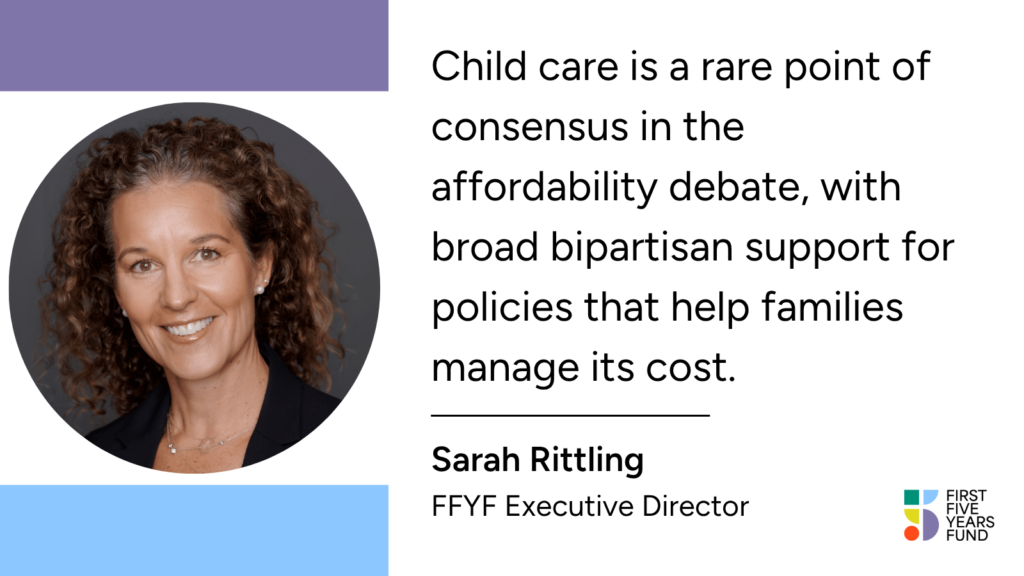
Child care is a rare point of consensus in the affordability debate, with broad bipartisan support for policies that help families manage its cost. Polling shows strong bipartisan agreement that helping families afford child care should be a national priority. Eighty-two percent of voters say federal funding for child care programs would help lower costs for working families, while 74 percent say this funding represents a good use of tax dollars. Support spans Democrats, Republicans and independents alike, creating a rare opportunity for policymakers.
Lawmakers from both parties have advanced proposals aimed at lowering costs for families and strengthening the child care system. These efforts include updates to child care tax credits as well as initiatives to expand and strengthen programs that help working families access care. Sens. Fischer and Gillibrand introduced the Child Care Modernization Act, which would increase the supply of quality child care in communities across the country, ensuring parents have more options.
At the same time, federal funding for child care programs remains essential to ensuring that solutions reach families across the country. When Congress invests in child care, it directly lowers costs for families and makes it possible for parents to stay in the workforce. Federal programs such as the Child Care and Development Block Grant and Early Head Start/Head Start help millions of families access affordable care and early learning opportunities each year. These effective programs help families keep more money in their pockets. They ensure parents can stay in the workforce, support healthy child development, and strengthen household and economic stability.
Businesses also increasingly recognize that child care challenges affect their ability to build and maintain a stable and booming workforce. Arecently expanded child care tax credit, known as 45F, means more employers can respond by offering child care benefits, partnering with providers or helping employees access resources that make care more affordable.
The affordability conversation dominating the 2026 political landscape reflects a simple reality: Families want solutions that address the costs shaping their daily lives. For parents of young children, child care is one of those defining costs. Ensuring families can find and afford reliable care helps parents stay in the workforce, supports children during critical years of development and strengthens the broader economy. At a time when policymakers are searching for ways to ease financial pressure on households, child care solutions represent one of the clearest opportunities to deliver meaningful relief and impact. With voters increasingly concerned about affordability, highlighting actions that help families find and afford child care demonstrates tangible results and shares strong public support.
Subscribe to FFYF First Look
Every morning, FFYF reports on the latest child care & early learning news from across the country. Subscribe and take 5 minutes to know what's happening in early childhood education.
Related

First Five Things To Know About: The SEED Act
Early childhood educators play a critical role in supporting children’s development and enabling parents to work. To ensure young learners can succeed, many use their own money to buy necessary …

FFYF Letter to the Ways and Means Committee in Support of the SEED Act
FFYF sent the following letter in support of the Supporting Early-childhood Educators’ Deductions (SEED) Act to the Committee on Ways and Means Chairman Jason Smith and Ranking Member Richard Neal. …

FY2027: Community Letter to Appropriators Calls For increased Funding for Child Care and Early Learning
WASHINGTON – The First Five Years Fund (FFYF) and a coalition of 87 major early education advocacy organizations from 32 states have a new letter to Congressional appropriators calling for …