HEARING: House Education and Workforce Subcommittee Hearing Highlights Importance of Federal and State Partnership in Addressing the Child Care Crisis
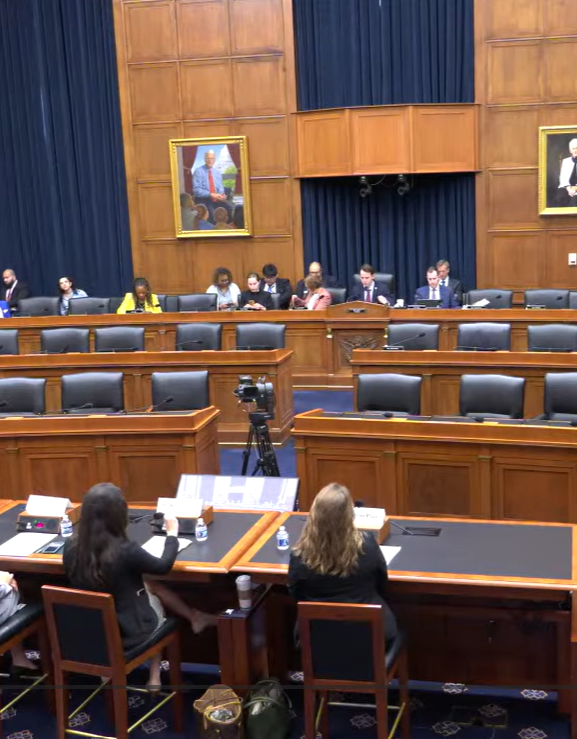
The House Education and Workforce Subcommittee on Early Childhood, Elementary, and Secondary Education held a hearing on September 2, 2026 to highlight how states are leveraging federal, state, and local funds to address the pervasive need for affordable, quality child care.
The hearing, titled “Supporting Working Families: State-Led Child Care Solutions,” featured witnesses from Iowa, Kentucky, and Tennessee, who spoke about their states’ efforts to build and maintain the supply of child care and the critical role of federal programs like Head Start and the Child Care and Development Block Grant (CCDBG) in providing the foundation for these efforts. This hearing is the subcommittee’s third on child care this Congress, following a hearing held in June 2025, which focused on bipartisan support for maintaining and strengthening CCDBG and other federal child care investments, and a hearing in January 2026, which highlighted the role employers can play in supporting access to child care for working families.
Key topics highlighted by Members on both sides of the aisle:
- There is broad, bipartisan agreement that child care is essential for families, employers, and local economies. For many families, however, limited child care options and the cost of available care continue to be barriers to finding care, forcing some parents to stay home.
- Increasingly states are building on federal investments to ensure access to more reliable, accessible quality care. The flexibility in CCDBG and Head Start allow states and local grantees to tailor services and solutions to local needs.
- For child care supply to remain consistent, states must be intentional in recruiting and retaining child care providers, including through start-up supports, compensation that covers the true cost of care, and offering child care to the children of providers.
- In addition to state solutions, there are numerous federal proposals to improve child care, including bills related to CCDBG, Head Start, the Community Services Block Grant, and the Child and Adult Care Food Program.
Witnesses included:
- Ms. Ryan Page, Director of Child Care, Iowa Department of Health and Human Services
- Ms. Kate Shanks, Senior Vice President of Public Affairs, Kentucky Chamber of Commerce
- Ms. Hanna Melnick, Senior Policy Advisor and Director of Early Learning Policy, Learning Policy Institute
- Ms. Jude White, Assistant Commissioner for Child Care and Community Service, Tennessee Department of Human Services
In their opening remarks, Chairman Kevin Kiley (R-CA) and Ranking Member Suzanne Bonamici (D-OR) underscored the importance of child care for families, children, and the economy and noted that federal programs like Head Start and CCDBG are vital but serve just a fraction of families in need of care. Chairman Kiley called for greater collaboration among federal, state, and local governments, as well as private partners, to address the cost and affordability of child care. He noted: “When child care works, parents can work, businesses can grow, and communities can thrive.”
Similarly, Ranking Member Bonamici spoke about the importance of state-federal partnerships, highlighting the value of ongoing federal investment to ensure access for families across the country, as well as allowing for innovation at the state level.
“States can help, but many states are already facing budget cuts, and it’s clear that families cannot solve the workforce shortage by paying more because the cost is already high. That’s why federal investment matters.” She offered the example of supplemental CCDBG funding during the pandemic, which allowed states to innovate, respond to local needs, and serve more children.
Throughout the hearing, members reiterated their strong bipartisan support for CCDBG and referenced conversations with constituents about the high cost of child care, which continues to be one of the largest expenses families face, and the ripple effect this has nationwide across multiple sectors. Congressman Mark Harris (R-NC) began his questions by saying: “It’s obvious if there’s one issue that reaches across the country and impacts millions of American families it’s child care. Child care supports parents’ ability to work, strengthens economic security for families in the country, and helps provide businesses with a reliable workforce across America.”
Similarly, Congressman Glenn Thompson (R-PA) noted that child care and housing surface in nearly every economic and workforce development conversation in his rural district, where employers are expanding but capacity is lacking. Congresswoman Adelita Grijalva (D-AZ) highlighted the impact for families and the broader economy: “When parents can’t find care, they reduce their hours or leave the workforce, costing our national economy $122 billion annually and Arizona’s economy $3.3 billion each year.” She called on states to lead where they can and for durable federal partnerships so that states don’t shoulder the burden of the child care crisis on their own.
Members also discussed potential solutions to building supply and helping families find and afford child care. Some members elevated successful state strategies, both from their own states and from others, and described how recent tax changes and federal funding for CCDBG, the Preschool Development Grants Birth through Five (PDG B-5), and Head Start are helping to address the cost and supply of child care. Full Committee Chairman Tim Walberg (R-MI) said: “A strength of CCDBG is the flexibility that it provides . . . . It gives parents the option of choosing the type of care that’s right for their family.”
Several members highlighted existing legislative proposals that would help to address different components of the child care crisis, including bills related to CCDBG, Head Start, the Community Services Block Grant, and the Child and Adult Care Food Program. In thanking witnesses for their testimony, Congressman Ryan Mackenzie (R-PA-07) referenced bipartisan legislation he introduced, the Child Care Modernization Act (CCMA), and stated: “This is the substantive discussion that we’re looking for in the child care space, and I’m fully confident we can find bipartisan solutions to address the issue.”
Congressman John Mannion (D-NY) began by saying: “Child care access and affordability are issues that continue to be top of mind for so many families, including those that I represent. . . . It’s helpful to look at what’s working at the state level to see how federal investments can help.” He then referenced his work on child care while serving in the New York State Senate, while emphasizing the important role of federal programs, such as CCDBG. “If we want to expand state-led child care initiatives, it’s just as critical that we also strengthen bipartisan support for CCDBG.”
Congressman Burgess Owens (R-UT) noted that “innovation from the bottom-up appears to be a solution that’s working” in asking about lessons states have learned. Ms. Page noted that COVID-era CCDBG supplemental funding allowed Iowa to test ideas it hadn’t tried before, including expanding partnerships with local businesses. He also asked about opportunities for states to learn from each other. Ms. Shanks shared that there are formal and informal networks of people that work in the child care space, and through these networks they’re able to share best practices and draw on other states’ work to inform policy in their own states.
Congresswoman Jahana Hayes (D-CT) referenced her own experience as both an early childhood and K-12 teacher in asking how additional federal investment would allow states to expand successful CCDBG-funded programs, such as Connecticut’s Care for Kids initiative, and implement new strategies to address the child care crisis. Ms. Melnick recommended efforts to expand eligibility to serve more families and provide more consistency in care, regardless of changes in family income.
Members also referenced the regulatory changes proposed for Head Start and spoke about the importance of the program, as well as the need to protect it. Without commenting on the proposal, Chairman Kiley expressed his support for Head Start and stated that major changes to the program should be led by Congress. Congressman Mark Messmer (R-IN) echoed support for protecting Head Start, saying he has visited most of the providers in his district and has seen the great value they provide to the children and families they serve.
In their closing statements, Ranking Member Bonamici and Chair Kiley again elevated the value of federal programs and policies, as well as successful state strategies, and called on their colleagues to work together to make care more affordable, expand access, and support the child care workforce. Chair Kiley highlighted the bipartisan, bicameral CCMA and called on House leadership to prioritize reauthorization of the CCDBG Act in this Congress. He concluded noting “the federal support we do provide catalyzes a lot more change and provides a lot more opportunities to families who really need it right now at a time when costs are so high and for child care in particular.”
Full testimony and video of the hearing can be found here.
Subscribe to FFYF First Look
Every morning, FFYF reports on the latest child care & early learning news from across the country. Subscribe and take 5 minutes to know what's happening in early childhood education.
Related

Head Start and Early Head Start: The Program Overview
This one-pager provides data and information on how Head Start works and who it serves.

Comments: 2026 Head Start Notice of Proposed Rulemaking
The following comments were submitted electronically by First Five Years Fund to the Administration for Children and Families via www.regulations.gov on October 5, 2026. Re: Comments on Notice of Proposed Rulemaking: …

A Closer Look at HHS’s Head Start Comprehensive Services Data
Head Start is designed to support the whole child and the whole family, which is why comprehensive services are central to the model.