FFYF Statement on H.R.7726: Concerns and Recommendations around Accountability and Access

Federal support for child care through the Child Care and Development Fund (CCDF) is foundational to the health and well-being of children, families, and the broader economy. The program helps working families afford care and supports the healthy development of young children.
Fraud or misuse of child care funds is unacceptable. It undermines public trust and diverts limited resources away from eligible families, many of whom remain on waiting lists and urgently need assistance.
At the same time, efforts to address fraud should be carefully targeted to protect program integrity without disrupting access for the families and providers who participate in good faith and represent the overwhelming majority of participants.
First Five Years Fund appreciates Congressional efforts to build upon the current oversight structures in CCDF to help ensure these funds are used as intended to support working families with young children. However, FFYF has significant concerns with H.R. 7726, the “Stop Child Care Scams Act of 2026.” This bill not only misses the opportunity to strengthen child care but could have sweeping negative consequences for states, providers and families.
FFYF outlined detailed concerns in a comment letter submitted to the House Committee on Education and Workforce earlier this year. Particularly of concern are provisions that would:
- Automatically consider unintentional reporting errors from child care programs as fraud, punishing providers for accidental oversights.
- Fail to give states adequate time to demonstrate progress toward compliance.
- Create confusion among states and the federal government regarding who holds responsibility and authority for fraud prevention.
- Impose sanctions that are not proportional to the severity and persistence of the noncompliance.
- And ultimately make it harder for parents to find and afford the child care they need.
We urge Congress to ensure that enforcement mechanisms are explicitly tied to intentional misconduct, sanctions are proportional to the severity and persistence of noncompliance, and that states demonstrating good-faith progress toward compliance have a meaningful opportunity to do so before facing consequences as severe as funding ineligibility.
Accountability and access are not mutually exclusive. The families and providers who depend on child care deserve policies that reflect both priorities, and we encourage Congress to renew their focus on advancing constructive, bipartisan policies that support the care and early learning needs of our nation’s families with young children.
Additional Details
The detailed FFYF response to the proposed legislation is outlined in the comment letter FFYF submitted to the House Committee on Education and Workforce in March.
Specifically:
- Withholding CCDF funding from an entire state would ultimately harm the children and providers who depend on these resources, not just the bad actors the policy intends to target.
- Permanent debarment provisions that do not explicitly limit enforcement to intentional misconduct risk penalizing providers operating in good faith, and would require significant new federal administrative capacity that the bill does not account for.
- Improper payments are not fraud. They often result from paperwork errors and administrative mistakes, not intentional misconduct. Treating them the same produces penalties that are far too severe for the underlying problem, and causes harm to the families these programs exist to serve.
- States operating complex child care systems in good faith deserve a clearly defined, reasonable path to compliance before facing consequences as severe as funding ineligibility.
- For states, the consequences include:
- Loss of federal funding that supports entire state child care systems, triggered by error rates that may reflect administrative complexity rather than systemic failure.
- Diversion of already-strained administrative resources away from serving families and toward compliance and corrective action.
- For the child care market and the families it serves the consequences include:
- Provider closures and funding disruptions in states that lose CCDF eligibility would reduce the overall supply of child care.
- This would drive up costs and wait times exponentially for families who remain in need of child care, in a market without subsidies.
The Bottom Line
The consequences of this law would fall hardest on the lowest-income working families and smallest providers, the precise populations federal child care funding exists to support, while doing little to deter the intentional bad actors the policy is designed to target.
Subscribe to FFYF First Look
Every morning, FFYF reports on the latest child care & early learning news from across the country. Subscribe and take 5 minutes to know what's happening in early childhood education.
Related

STATEMENT: First Five Years Fund’s Sarah Rittling in Opposition to Reported Expansion of Eligibility for Federal Child Care Subsidy
According to recent reporting in the New York Times, the White House is considering a new rule that expands eligibility of the federal child care subsidy program to now include married couples with one stay-at-home parent. This is a statement from First Five Years Fund Executive Director Sarah Rittling.
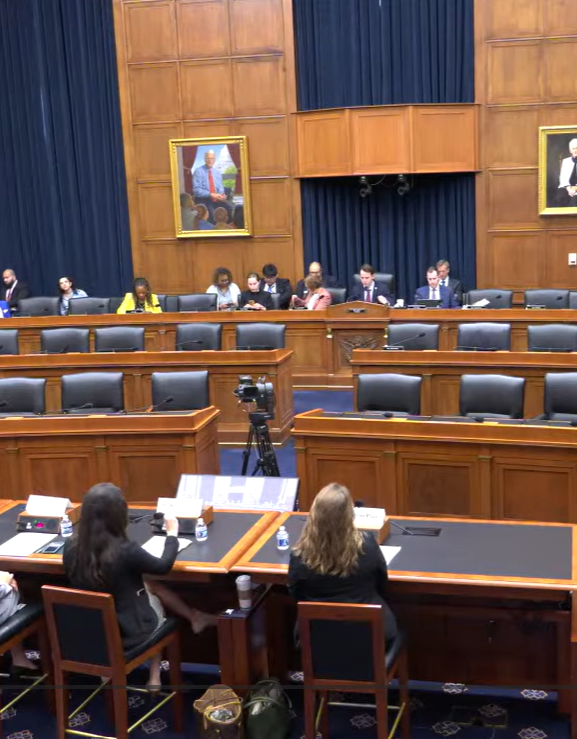
HEARING: House Education and Workforce Subcommittee Hearing Highlights Importance of Federal and State Partnership in Addressing the Child Care Crisis
The House Education and Workforce Subcommittee on Early Childhood, Elementary, and Secondary Education held a hearing on September 2, 2026 to highlight how states are leveraging federal, state, and local funds to address the pervasive need for affordable, quality child care.
State Of Play: The Head Start NPRMs (Rules and Regulation Changes)
As part of a “Child Care Reform Package” released on May 11, the Administration issued four separate policy actions: a Head Start Notice of Proposed Rulemaking (NPRM), the Child Care and Development Fund (CCDF) Final Rule, a Temporary Assistance for Need Families (TANF) Information Memorandum, and a CCDF Dear Colleague Letter.