Understanding Improper Payments: Child Care and Development Fund

Overview
The Child Care and Development Fund (CCDF) is governed by federal law and regulations that require states toregularly measure and report improper payments to the Administration for Children and Families (ACF) within the U.S. Department of Health and Human Services (HHS).
Fundamental to understanding this system is recognizing that while all fraudulent payments are considered improper, not all improper payments result from fraud.
Improper payments and fraud are related but distinct concepts that are often conflated. States operate robust oversight systems, including eligibility verification, provider monitoring, and case reviews, to ensure compliance and accountability. Improper payments identified through these avenues most often result from unintentional administrative or documentation errors, or timing issues related to eligibility. Fraud, by contrast, is a narrow subset of improper payments involving deliberate misrepresentation or deception, and it accounts for only a small fraction of improper payment cases.
CCDF Accountability
The Child Care and Development Fund (CCDF) is a federal block grant that helps states, territories, and tribes support low-income families in accessing child care so parents can work, attend school, or take part in job training. These funds are administered at the state level by designated Lead Agencies.
Every three years, the Lead Agency must submit a CCDF State Plan, outlining how it will operate its child care program following federal law and regulations. This includes clear policies and internal controls to promote program integrity and accountability. Among other things, the plan must specifically address how the state will:
- Ensure sound fiscal management;
- Identify areas of risk;
- Provide training on program requirements and integrity; and
- Regularly evaluate internal controls.
These accountability measures are in place to prevent errors and reduce waste, fraud, and abuse. In addition to federal review and approval of State Plans, CCDF oversight includes ongoing federal and state monitoring and regular reporting to ensure accountability and effective program administration.
Improper Payments & Fraud
CCDF is subject to the Payment Integrity Information Act of 2019 (PIIA), which governs improper payments across federal programs. Under PIIA, improper payments include overpayments (which may be recoverable), underpayments, and payments made without sufficient documentation to confirm they were issued correctly. CCDF regulations also require Lead Agencies to conduct error rate reviews every three years. For these reviews, an “error” is any violation or misapplication of program requirements – regardless of whether it results in an improper payment. To calculate both the error and improper payment rates, Lead Agencies review a random sample of 276 cases, drawn evenly across a 12-month period. States with an improper payment rate above 10% must develop and implement a corrective action plan.
Fraud involves individuals or entities knowingly providing false information to receive funds. PIIA does not require agencies to design improper payment measurement methods to capture fraud specifically. Similarly, CCDF error rate reviews focus on front-end administrative processes, such as eligibility determination and subsidy amounts. They do not measure fraud or intentional program violations by families or providers. As a result, improper payment estimates are not a measure of fraud in the program.
CCDF includes additional safeguards to address fraud directly. State Plans must describe policies and procedures to prevent and detect waste, fraud, and abuse, including processes to investigate suspected fraud, recover misspent funds, and impose sanctions (such as program disqualification) for program violations. States must conduct an annual single audit; additional integrity measures also exist at both the state and federal level.
The Details: What the existing safeguards and oversights looks like
State Oversight
- Internal Controls: States must maintain strong controls across eligibility verification, provider licensing, attendance tracking, and payment authorization to ensure accurate and proper payments.
- Risk Assessments: States identify and manage risks in eligibility and payment processes through tools such as data matching, real-time system alerts, and routine quality assurance and supervisory reviews.
- Provider Monitoring: States conduct annual, unannounced inspections of providers receiving CCDF funds to ensure compliance with health and safety requirements.
- Single Audits: States that expend $750,000 or more in federal funds annually are subject to organization-wide audits under the Uniform Guidance. Findings of unallowable CCDF costs result in disallowances, requiring repayment or offset of misspent funds.
- State Audits and Inspector General Reviews: State auditors and inspectors general regularly review CCDF expenditures and drawdown practices to ensure compliance and accountability.
- Fraud Detection and Investigations: States investigate complaints, conduct reviews of providers and families, and refer cases for enforcement action when warranted.
Federal Oversight (ACF/HHS)
- CCDF State Plan Approval: ACF reviews and approves multi-year State Plans that detail eligibility policies, payment practices, provider requirements, and internal controls.
- Payment Management Review: States access CCDF funds through a federal payment system and must certify that expenditures are allowable, properly documented, and tied to eligible services.
- Program Reviews and Monitoring: ACF conducts ongoing monitoring, including onsite and desk reviews, to assess compliance with CCDF requirements, with a focus on fiscal controls, eligibility determinations, and payment accuracy.
- Audit Resolution: Federal audits, including Single Audits under the Uniform Guidance, identify questioned or disallowed costs and may require repayments, corrective action, or additional conditions on future funding.
- Targeted Conditions or Restrictions: When risks are identified, HHS may impose additional oversight, such as enhanced documentation requirements, restrictions on drawdowns, or prior approval for expenditures.
- Sanction Authority: Following due process, HHS may require repayment of improperly spent funds, reduce a state’s administrative allotment by up to the amount misspent, or apply additional sanctions as appropriate.
Though fraud is identified from time to time, it represents a distinct and narrow category, involving deliberate misrepresentation, that makes up the minority of improper payments. As such, improper payment rates are best understood as program integrity measures used to identify areas for improvement, rather than direct indicators of wrongdoing. Strong state oversight remains central to safeguarding CCDF funds, while ensuring eligible families can access child care.
Download Here
Subscribe to FFYF First Look
Every morning, FFYF reports on the latest child care & early learning news from across the country. Subscribe and take 5 minutes to know what's happening in early childhood education.
Related

STATEMENT: First Five Years Fund’s Sarah Rittling in Opposition to Reported Expansion of Eligibility for Federal Child Care Subsidy
According to recent reporting in the New York Times, the White House is considering a new rule that expands eligibility of the federal child care subsidy program to now include married couples with one stay-at-home parent. This is a statement from First Five Years Fund Executive Director Sarah Rittling.
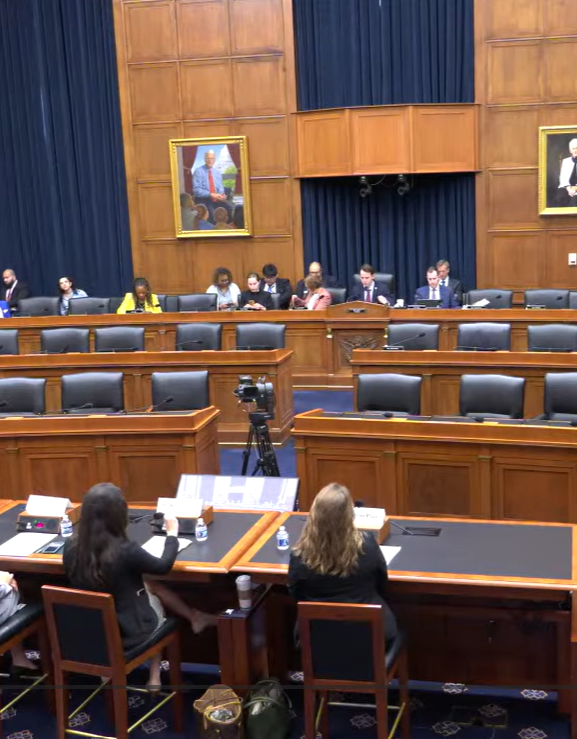
HEARING: House Education and Workforce Subcommittee Hearing Highlights Importance of Federal and State Partnership in Addressing the Child Care Crisis
The House Education and Workforce Subcommittee on Early Childhood, Elementary, and Secondary Education held a hearing on September 2, 2026 to highlight how states are leveraging federal, state, and local funds to address the pervasive need for affordable, quality child care.
State Of Play: The Head Start NPRMs (Rules and Regulation Changes)
As part of a “Child Care Reform Package” released on May 11, the Administration issued four separate policy actions: a Head Start Notice of Proposed Rulemaking (NPRM), the Child Care and Development Fund (CCDF) Final Rule, a Temporary Assistance for Need Families (TANF) Information Memorandum, and a CCDF Dear Colleague Letter.