State Momentum Meets Federal Opportunity: NCSL’s Child Care Framework and the Child Care Modernization Act

By: Amanda Guarino, Managing Director, Policy & National Partnerships
The National Conference of State Legislature’s (NCSL) new bipartisan report, Childcare at a Crossroads, distills what a group of 13 state legislators – Republicans and Democrats alike – agree the child care system needs: more supply, greater affordability, a stronger workforce, streamlined licensing, sturdier small businesses, sustainable funding, and clearer governance. It’s a state-facing document, built on the premise that there’s no federal template and no single fix. But several of its recommendations point directly at the same lever Congress has in front of it right now: the Child Care Modernization Act (CCMA), which would reauthorize and strengthen the Child Care and Development Block Grant (CCDBG).
The overlap isn’t a coincidence. It reflects a shared diagnosis of where the system is breaking down – and states are already testing the fixes the CCMA would take national.
KEY RECOMMENDATIONS
Getting Reimbursement Rates Right
NCSL’s funding recommendation calls on states to move toward cost-estimation models rather than market-rate surveys, so provider payments reflect what care actually costs to deliver rather than what an undersupplied market happens to charge. According to NCSL, eight states and Washington, D.C. have already made or begun this transition. New Mexico built its own cost-model calculator so providers can see how proposed subsidy rates affect their financial viability, and its legislature requires a comprehensive financing plan every four years.
The CCMA takes this state-tested approach national. The bill directs states toward cost-estimation models for CCDBG reimbursement, with a five-year transition window – turning a handful of early movers into the federal baseline.
Building Supply Where It’s Thinnest
NCSL puts it plainly: most child care businesses barely break even, which shuts them out of traditional bank financing for facilities. States have responded with targeted capital tools – Maryland’s revolving no-interest loan fund for providers serving subsidized families, Colorado’s and Oregon’s infrastructure grant programs for facility planning and construction, and Ohio’s $15 million Infant and Toddler Infrastructure Grant aimed at the highest-cost, lowest-supply segment of care. NCSL also flags rural and nontraditional-hours gaps specifically, pointing to Illinois’ grants for providers serving nontraditional-hour workers and Colorado’s training program for family, friend, and neighbor caregivers.
The CCMA mirrors this approach with dedicated facility grants for renovation, repair, and construction, technical assistance targeted at rural and in-home providers, and a directive to USDA to ease regulatory burdens that fall disproportionately on home-based providers in rural areas.
Protecting Parental Choice and Mixed Delivery
NCSL treats mixed delivery – centers, family child care homes, faith-based and school-based programs – as a design principle, not an afterthought. Illinois offers grants to early childhood programs that serve first responders, third-shift workers, and others who need care outside traditional hours, expanding the range of settings available to families with non-traditional schedules. New York established a differential payment rate for providers serving children during non-traditional hours, also helping sustain that segment of the mixed-delivery system. And Colorado created a training and support program for family, friend, and neighbor caregivers, formally recognizing informal care as part of the mixed-delivery system rather than treating it as a stopgap.
The CCMA reinforces the same principle at the federal level: preserving parents’ choice of setting while expanding CCDBG eligibility to more working families who are currently priced out of the program.
States Going Further
NCSL’s report also lays out other initiatives. On workforce, states like Vermont, which tied wage floors to Bureau of Labor Statistics educator wage data, and Washington, D.C., which created pay parity grants aligning infant and toddler educator pay with pre-K and public-school staff, are testing compensation fixes tailored to their own labor markets. On licensing, Michigan’s shift away from static ratings toward continuous quality improvement, and Missouri’s task-force review that found more than 10% of its regulations outdated or redundant, point to administrative streamlining that only states can undertake. And on governance, the 13 states that have consolidated early childhood programs into standalone agencies – Illinois and Kansas among the more recent examples – reflect a structural choice that remains within states’ own authority.
THE BOTTOM LINE
We have real admiration for the work reflected in NCSL’s report. Thirteen state legislators from different parties, regions, and starting points sat down together and found common ground on one of the hardest, most consequential issues families face. That kind of bipartisan problem-solving is exactly what the child care system needs, and it’s already producing real results for families in states across the country.
The Child Care Modernization Act was written to help meet some of the challenges these state leaders have identified: more accurate reimbursement, new supply where it’s needed most, and continued support for parents’ ability to choose the setting that works for their family. But we also recognize the NCSL report reaches further than the CCMA does. States still have important, hard work ahead on workforce compensation, licensing modernization, and governance. Taken together, the NCSL framework and the CCMA offer a clear picture of where federal and state action intersect – and where each has its own role to play in building a child care system that works for families.
LEARN MORE
Subscribe to FFYF First Look
Every morning, FFYF reports on the latest child care & early learning news from across the country. Subscribe and take 5 minutes to know what's happening in early childhood education.
Related

STATEMENT: First Five Years Fund’s Sarah Rittling in Opposition to Reported Expansion of Eligibility for Federal Child Care Subsidy
According to recent reporting in the New York Times, the White House is considering a new rule that expands eligibility of the federal child care subsidy program to now include married couples with one stay-at-home parent. This is a statement from First Five Years Fund Executive Director Sarah Rittling.
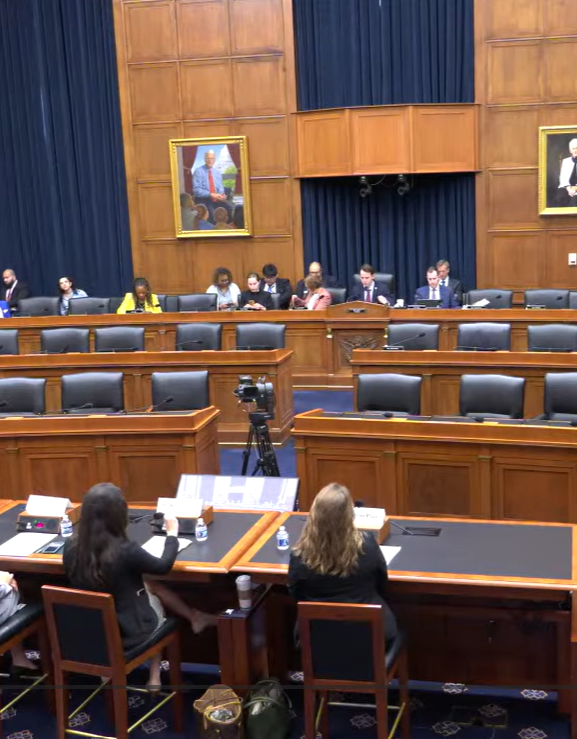
HEARING: House Education and Workforce Subcommittee Hearing Highlights Importance of Federal and State Partnership in Addressing the Child Care Crisis
The House Education and Workforce Subcommittee on Early Childhood, Elementary, and Secondary Education held a hearing on September 2, 2026 to highlight how states are leveraging federal, state, and local funds to address the pervasive need for affordable, quality child care.
State Of Play: The Head Start NPRMs (Rules and Regulation Changes)
As part of a “Child Care Reform Package” released on May 11, the Administration issued four separate policy actions: a Head Start Notice of Proposed Rulemaking (NPRM), the Child Care and Development Fund (CCDF) Final Rule, a Temporary Assistance for Need Families (TANF) Information Memorandum, and a CCDF Dear Colleague Letter.