The Expanded 45F Tax Credit: What Providers and Employers Need to Know

How employers and child care providers can work together to strengthen early learning and create sustainable business models
The Big Picture
Child care is one of the biggest barriers keeping parents out of the workforce. For employers, that means lost talent, higher turnover, and increased hiring costs. For early childhood programs – where costs are high but margins are razor-thin – it means struggling to find sustainable funding while working to stay open and serve families.
The 45F Employer-Provided Child Care Tax Credit changes that equation for both. It gives employers real financial incentives to invest in child care, and it creates new opportunities for early learning providers to grow and thrive on a more sustainable footing.
This resource explains how the credit works and how employers and providers can get started.
What Is 45F?
Section 45F of the Internal Revenue Code is a federal tax credit that lets employers claim substantial tax savings when they invest in child care for their employees. It has been on the books since 2001 but has historically seen limited use.
Starting January 1, 2026, 45F became significantly more helpful. The credit rates rose to 40% (50% for small businesses), annual caps more than tripled, and – for the first time – the law explicitly allows intermediaries like child care resource and referral agencies (CCR&Rs) and non-profit networks to help businesses navigate the credit. In other words, employers don’t have to figure this out alone.
The expanded credit is available now.
What Changed in 2026?
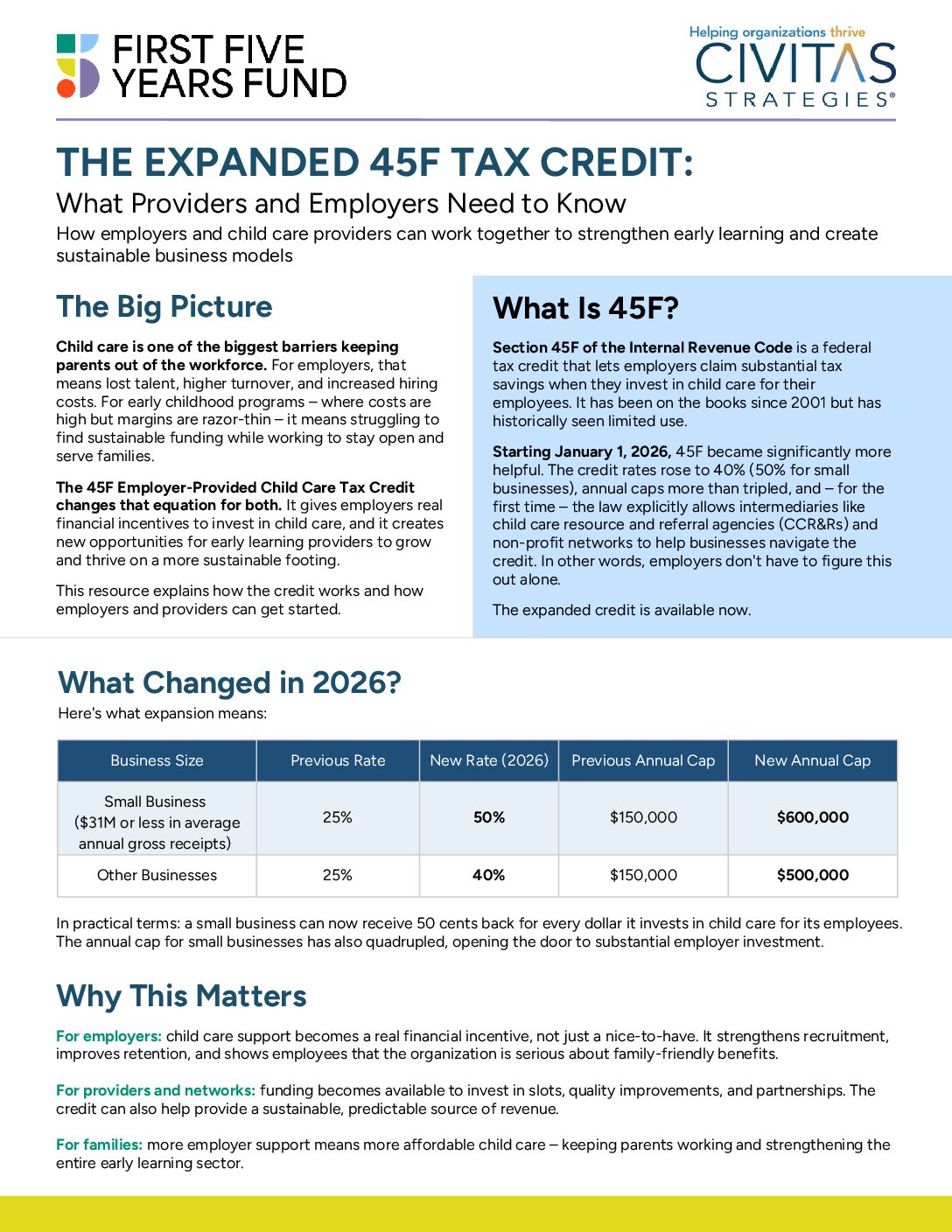
Here’s what expansion means:
| Business Size | Previous Rate | New Rate | Previous Annual Cap | |
|---|---|---|---|---|
| Small Business ($31M or less in average annual gross receipts) | 25% | 50% | $150,000 | $600,000 |
| Other Businesses | 25% | 40% | $150,000 | $500,000 |
In practical terms: a small business can now receive 50 cents back for every dollar it invests in child care for its employees. The annual cap for small businesses has also quadrupled, opening the door to substantial employer investment.
Why This Matters
For employers: child care support becomes a real financial incentive, not just a nice-to-have. It strengthens recruitment, improves retention, and shows employees that the organization is serious about family-friendly benefits.
For providers and networks: funding becomes available to invest in slots, quality improvements, and partnerships. The credit can also help provide a sustainable, predictable source of revenue.
For families: more employer support means more affordable child care – keeping parents working and strengthening the entire early learning sector.
Download the full report below
Subscribe to FFYF First Look
Every morning, FFYF reports on the latest child care & early learning news from across the country. Subscribe and take 5 minutes to know what's happening in early childhood education.
Related

Making News: The 2026 SEED ACT
The SEED Act continues to make headlines! The bipartisan Supporting Early-Childhood Educators’ Deductions (SEED) Act became law in September 2026, marking a key bipartisan victory for early childhood educators and …

First Five Things To Know About: The SEED Act
Early childhood educators play a critical role in supporting children’s development and enabling parents to work. To ensure young learners can succeed, many use their own money to buy necessary …

New Joint Economic Committee (JEC) Minority Report Highlights Impact of Child Care Tax Credits
Existing child care tax incentives are a tool that can reduce child care costs for families while delivering a strong return on investment for employers.