State Data: Child Care Ratios – Adult-to-Child Ratios for Center-Based Care

Caring for infants, toddlers, and preschoolers is labor-intensive. To keep children safe and give them the attention they need to learn and thrive, child care programs must maintain appropriate adult-to-child ratios. Smaller group sizes and strong teacher-child interactions help ensure children receive consistent, responsive care during the years of fastest brain development. These early relationships support healthy social, emotional, physical, and language development, while also giving parents confidence that their children are in a safe, nurturing environment.
Infants and toddlers require the most individualized care because they depend on adults for feeding, diapering, supervision, and emotional support throughout the day. As children grow more independent, ratios can gradually increase, while still remaining small enough for teachers to provide meaningful engagement and support for learning and development.
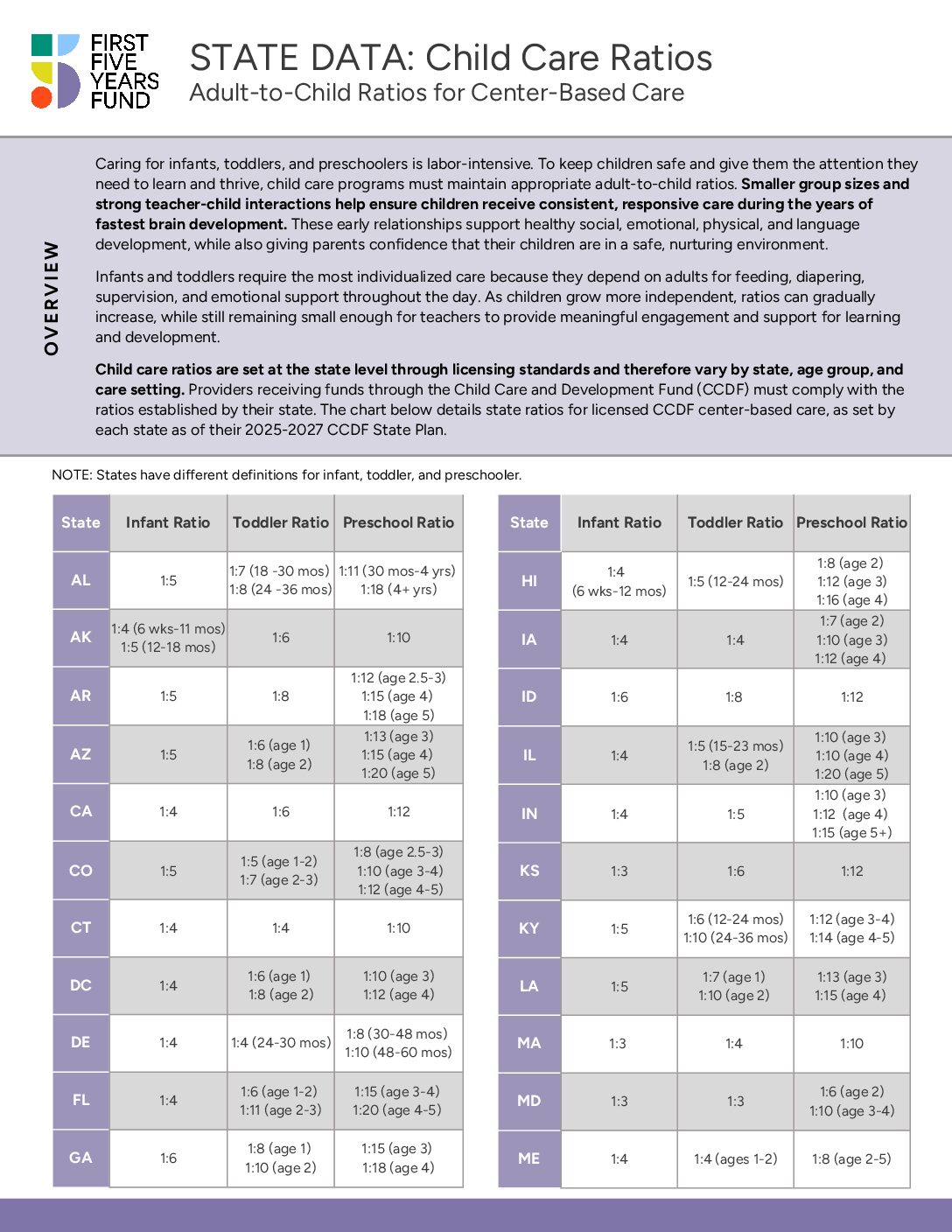
Child care ratios are set at the state level through licensing standards and therefore vary by state, age group, and care setting. Providers receiving funds through the Child Care and Development Fund (CCDF) must comply with the ratios established by their state. The chart below details state ratios for licensed CCDF center-based care, as set by each state as of their 2025-2027 CCDF State Plan.
Subscribe to FFYF First Look
Every morning, FFYF reports on the latest child care & early learning news from across the country. Subscribe and take 5 minutes to know what's happening in early childhood education.
Related

STATEMENT: First Five Years Fund’s Sarah Rittling in Opposition to Reported Expansion of Eligibility for Federal Child Care Subsidy
According to recent reporting in the New York Times, the White House is considering a new rule that expands eligibility of the federal child care subsidy program to now include married couples with one stay-at-home parent. This is a statement from First Five Years Fund Executive Director Sarah Rittling.
HEARING: House Education and Workforce Subcommittee Hearing Highlights Importance of Federal and State Partnership in Addressing the Child Care Crisis
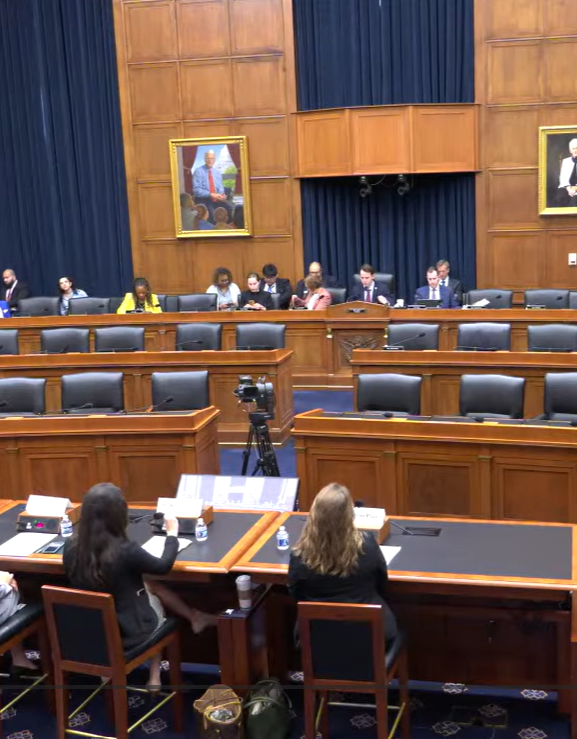
The House Education and Workforce Subcommittee on Early Childhood, Elementary, and Secondary Education held a hearing on September 2, 2026 to highlight how states are leveraging federal, state, and local funds to address the pervasive need for affordable, quality child care.
State Of Play: The Head Start NPRMs (Rules and Regulation Changes)
As part of a “Child Care Reform Package” released on May 11, the Administration issued four separate policy actions: a Head Start Notice of Proposed Rulemaking (NPRM), the Child Care and Development Fund (CCDF) Final Rule, a Temporary Assistance for Need Families (TANF) Information Memorandum, and a CCDF Dear Colleague Letter.